

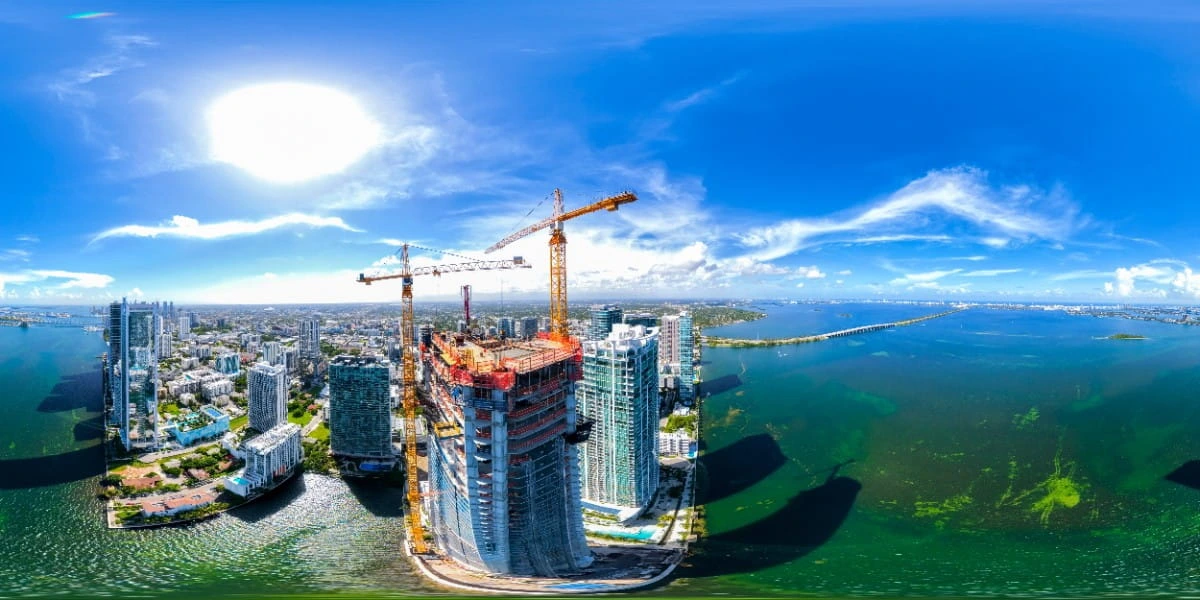
Miami is one of the cities in the world where the most Colombians live outside their home country. According to various sources citing official figures, the Colombian population in this city and in South Florida exceeds 300 thousand residents (2026), which reflects their interest in living, studying or doing business in this region, not counting those who visit as tourists once or several times a year.
For several years now, Colombians have appeared among the top searchers for properties and investments in the Miami and South Florida real estate market, taking advantage of the opportunities they find there to protect and diversify their wealth, and enjoying one of the regions with the best quality of life in the United States, thanks to its climate, its infrastructure, its ideal environment for doing business, among many other attributes that make it a highly sought-after destination for growth.
In this guide we will explain the reasons behind Colombians' interest in investing in Miami, and how to make a successful real estate investment in this market from your home country.
Miami as an Investment Destination for Colombians
The relationship between Miami and Colombia is not recent and goes back several years. This city and South Florida have been one of the most attractive tourist destinations for Colombians in recent years, and this is reflected in official reports. According to Visit Florida, about 655,000 Colombians visited the region in 2025, 6% more than in 2024, and the figure rises year after year.
In real estate, Colombia was the second country with the largest share of property purchases in Florida in the period from August 2024 to July 2025, with 10% of total sales in the state, surpassed only by Canada, which contributed 18%, according to Florida Realtors. In total, these buyers invested USD 925 million in that period, a figure far higher than the USD 307 million they spent in the period from August 2023 to July 2024.
The reasons for this boom in real estate investment by Colombians in recent times rest on the positive performance that the Miami and South Florida market has had recently, with several years of property price appreciation, as well as the opportunities found there to generate additional income in dollars through vacation rentals, taking advantage of the increase in visits to this region by Colombian tourists.
On the other hand, the behavior of the dollar's exchange rate against the Colombian peso during 2026, with a depreciation of close to 15%, has benefited Colombian buyers interested in investing in Miami and South Florida, since, compared with a year ago, they now have to allocate fewer Colombian pesos to their transaction. This has motivated more people to diversify their wealth in this market.
Diversifying Your Wealth Outside Colombia
In simple terms, diversification means not concentrating all of your wealth in a single place. In family finances, this means distributing capital across different alternatives, regions and currencies to mitigate the impact of any unforeseen or uncontrollable event that could affect you negatively. The fundamental goal is not only to earn a return, but to protect the financial stability you have built against possible setbacks in a given sector or country.
Geographic Diversification
By allocating part of your capital outside Colombia to acquire a property in Miami, your wealth is no longer fully exposed to local political or economic dynamics. The United States provides a framework of strong legal certainty and rigorous respect for private property, guaranteeing full certainty over your investment with a long-term vision.
Currency Diversification
It consists of backing your resources with a strong currency such as the U.S. dollar. For an investor in Colombia, owning real estate that increases in value or generates monthly rental income in dollars is a direct hedge against the devaluation of the Colombian peso and inflation, securing the liquidity of your wealth in a global currency.
Diversification by Asset Type
It means combining different types of assets. Real estate in high-demand areas such as Miami and South Florida offers highly solid tangible assets. Unlike the volatility of the stock market, a real estate property preserves and tends to increase its real value over time, while also providing a steady flow of rental income.
Risks of Concentrating Your Wealth in a Single Market
Keeping all of your resources in Colombia—whether in properties, companies or banks—directly exposes your capital to fluctuations in the national economy. Situations such as peso devaluation, regulatory changes or inflation can reduce the purchasing power of your savings. Diversifying internationally is the soundest strategy to counter those risks and give your family's future greater firmness.

The Miami Real Estate Market Compared With Colombia's
For the Colombian investor, comparing the Miami and South Florida real estate market with that of Colombia's main cities, such as Bogotá or Medellín, goes beyond analyzing how much a property costs, because in that process it is also important to understand the nature of each market, its historical behavior and the return structure each one offers.
Although both sectors offer very attractive alternatives depending on the financial profile, there are many differences in prices, demand dynamics, rents and project types.
Prices
The price scale in the two markets reflects very marked differences in the currency of origin and the average value of land:
- 01Colombiain the higher socioeconomic residential segment (prime and luxury) in exclusive areas of Bogotá and Medellín, the average price per square meter ranges between 11 and 22 million Colombian pesos, that is, about USD 2,800 to USD 5,200 at the current exchange rate. This places the value of a high-end apartment in these exclusive areas in a range starting at 1,200 million and exceeding 3,500 million pesos (between USD 300,000 and USD 850,000).
- 02Miamithe median price in the Miami metropolitan area for condo residences is around USD 420,000 to USD 590,000, with values per square meter starting at USD 4,000 to USD 6,000 in established areas and which can exceed USD 9,000 in luxury waterfront corridors or high-demand districts such as Brickell and Edgewater.
Demand
Who buys and where the capital comes from completely changes the market dynamics in each destination:
- 01Colombiademand is driven mainly by the domestic market (local buyers purchasing their own home or institutional/individual investors from the country), and factors such as local mortgage interest rates and access to government subsidies determine the speed of purchases.
- 02Miamias an international financial and tourism capital, it attracts local U.S. buyers (driven by domestic migration to states with no state income tax such as Florida) and high demand for investment from foreigners, including Colombians.
Rents
The rental income model varies widely depending on the currency, the rental terms and the net return:
- 01Colombiathe traditional long-term lease (minimum 12 months) is the most widespread, regulated by Ley 820 and tied to the inflation index (IPC). Short-term rental (Airbnb and vacation) generates higher returns in specific tourist or dining areas, but is subject to the rules of propiedad horizontal.
- 02Miamiit offers income directly in dollars. The condo-hotel format or projects with flexible short-term rental licenses make it possible to maximize income by taking advantage of the constant flow of tourism and executive immigration, reaching occupancy rates that hold up throughout the year.
Property Types
The real estate offering and its management models are structured according to the needs of the local and international market:
- 01Colombiamultifamily housing projects under propiedad horizontal and houses in gated communities predominate. In off-plan projects, the encargo fiduciario (fiducias) structure is common, in which the buyer pays the down payment over the course of construction in installments ranging from 12 to 36 months.
- 02Miamihigh-rise residential condos, condos with a nautical concept or private dock, single-family homes and mixed-use residential/commercial developments stand out. In pre-construction, the contract with deposits held in escrow, structured by construction phases (reservation, contract, start of construction and completion of the structure), provides legal guarantees to the international buyer.
Market Evolution
Behavior across economic cycles shows how each market reacts:
- 01Colombiathe market is characterized by the resilience and stability of real estate as an asset during inflationary periods, where finca raíz has historically worked as a protective shield for wealth against the long-term devaluation of the peso.
- 02Miamithis market has had continuous capital appreciation and high liquidity. As an asset traded internationally in dollars, it offers a quick commercial exit in case of liquidation or refinancing of the property.
Exclusive resource
Miami Investment Guide 2026
The legal and financial step by step, in a PDF.
Download the free guideInvesting in Miami to Generate Rental Income
According to figures from Miami's tourism authorities, the city received more than 28 million visitors from different parts of the world in 2025, including Colombians. This creates great opportunities to generate additional income in dollars for investors who decide to put their property up for rent.
Rental Demand
Miami's rental market rests on three main demographic and economic pillars. First, the city is experiencing steady growth driven by domestic migration from other U.S. states (such as New York, New Jersey and California), attracted by the climate, the quality of life and the absence of a state tax on individual income. Second, there is a massive flow of visitors for tourism, conventions, business and medical treatments that generates constant occupancy throughout the year. Finally, much of the local population opts for continuous residential renting because of job mobility, which maintains a stable base of tenants for long-term contracts.
Traditional Rental vs. Short-Term Stay
In the Miami real estate market, two main models of operation coexist, each with different operating dynamics and return profiles:
- 01Traditional or long-term rentalit is formalized through contracts of at least 12 months. The tenant pays the monthly rent and, at times, utilities. It stands out for offering predictable cash flow, lower maintenance costs and low turnover.
- 02Short-term or vacation rentalit operates by the day, week or month through digital platforms or hotel management programs. The property is delivered fully furnished and management takes care of guest service. It allows rates to be adjusted in high season and gives the owner the flexibility to use the property at specific times.
Areas With Different Demand Profiles
The property's geographic location defines the tenant profile and the predominant rental type in each area:
- 01Brickell and Downtown MiamiThey concentrate executive and corporate demand, along with condos with short-term rental licenses focused on urban business tourism.
- 02Miami Beach and Sunny IslesShort- and mid-term vacation rental prevails because of the high concentration of leisure and beach tourism.
- 03Health District and university areaThey show stable long-term demand driven by medical staff, teachers and researchers.
- 04Miami River, Edgewater and WynwoodThey offer a mixed environment that attracts cultural tourists, digital nomads and executives looking for excellent connectivity.
Associated Costs
Calculating a property's net return (Net Operating Income or NOI) requires considering the usual operating expenses in the U.S. market:
- 01Property tax (Property Tax)annual rate charged by the county that ranges between 1.5% and 2% of the property's assessed taxable value.
- 02Condominium Association fees (HOA)monthly fee that covers maintenance of common areas, the building's structural insurance, reserve funds and security.
- 03Property insuranceindividual coverage for the interior of the unit and liability insurance.
- 04Management fees (Property Management)they range between 8% and 10% of the monthly rent for traditional rental, and between 15% and 25% of gross income for short-term vacation rental.
Regulations
Compliance with the legal framework is a central aspect of the investment's viability. Miami-Dade County zoning laws determine in which geographic areas short-term rental is allowed, providing for administrative penalties for those who operate in unauthorized areas.
In parallel with municipal rules, each condominium's internal regulations set their own restrictions, in many cases requiring minimum lease terms. For this reason, projects with flexible licenses approved from their conception offer the legal certainty needed to operate on vacation rental platforms, while also requiring the corresponding state licenses and the collection of the applicable tourist taxes.
Miami as a Second Home or a Place to Live
Colombian buyers can also choose a property in Miami and South Florida to live in or as a second home, to occupy at certain times of the year, or when they visit the city for business or personal activities.
Connectivity With Colombia
From most of Colombia's main cities there are direct flights to Miami and Fort Lauderdale international airports, which makes travel easier for those who acquire a property in the region and decide to live in it or keep it as a second home.
Lifestyle
Lifestyle is one of the most decisive factors when choosing Miami as a permanent residence or a second home. The city and South Florida are today the epicenter of multiple internationally significant events and activities, such as the Formula 1 Grand Prix, the PGA golf circuit, NBA, MLB, NFL and MLS games, ATP and WTA tennis events, as well as concerts and artistic performances by the world's most famous personalities.
Education, Business, Entertainment and Services
Miami and South Florida have become an epicenter for business and commerce, currently serving as the main headquarters of multiple corporations that have found in this destination a unique environment to consolidate their expansion and growth.
On the other hand, the region has some of the best universities and education centers in the entire state of Florida, which attracts the interest of thousands of families who send their children there every year to complete their higher education.
Likewise, Miami and South Florida concentrate a great commercial hub that attracts thousands of buyers from Colombia and all of Latin America every year, and having a second home in this region is a great opportunity for those who have to travel on various occasions during the year.
What Do Colombian Buyers Look for in Miami?
Most Colombian investors in Miami and South Florida look for wealth preservation, operating profitability and efficiency in remote management. Since these are buyers seeking to diversify capital in a strong currency such as the dollar, their real estate preferences are guided by specific criteria of type, budget and strategic location.
Property Type
Colombian buyers' preferences are predominantly concentrated on flexible-use residential condos that hold approved licenses for short-term rentals. This format is very attractive for those who want to combine dollar income generation through vacation rentals with the possibility of using the property during their business or leisure trips to Miami.
Within this category, demand is clearly focused on one- and two-bedroom properties. This type represents the product with the highest occupancy and turnover rate in the rental market, offering an optimal balance between an accessible entry price for capital diversification and a steady flow of guests or tenants.
Investment Ranges
The investment ticket for the medium-high and high net worth profile coming from Colombia usually falls in a range between USD 400,000 and USD 800,000. This amount allows them to access pre-construction projects or resale units in established locations, taking advantage of deferred payment schemes during construction or mortgage financing structures for foreigners that cover up to 70% of the property's value.
Strategic Areas of Interest
- 01Brickell and Downtown Miamiestablished areas that attract those looking for an executive profile, sustained appreciation and proximity to the financial center.
- 02Miami River and Edgewaterareas in the midst of urban transformation that offer an attractive price-to-appreciation ratio and access to nautical and cultural life.
- 03Doral and Westonresidential areas highly sought after by Colombian families who are considering migrating, settling or being close to top-tier educational centers.
New Developments (Pre-Construction) vs. Existing Properties (Resale)
Although existing properties attract buyers who need to generate income right away, there is a clear inclination among Colombian investors toward pre-construction projects for the following advantages:
- 01Leverage with no interest during constructionthe possibility of paying the down payment (generally between 30% and 40%) in deferred installments over two to three years of construction.
- 02Appreciation gains in the launch phasecapturing capital gains from "lista cero" prices until the project's delivery date.
- 03Low initial maintenance costsdirect developer warranties and fully finished units that eliminate the need for immediate renovations.
Most Relevant Features for This Profile
When evaluating the alternatives available on the market, the Colombian buyer prioritizes projects that offer a centralized management scheme under the "llave en mano" concept, in which a professional firm handles the comprehensive management of rentals, maintenance and guest service, freeing the owner from any operating burden from a distance. Likewise, regulatory freedom is also valued, to alternate without restrictions between personal use, long-term residential rental or short-term stays on digital platforms.
On the other hand, the purchase decision is influenced by the quality and variety of the development's amenities. Elements such as private docks, coworking spaces, resort-style terraces with pools, state-of-the-art gyms and restaurants integrated within the building itself not only raise the owner's experience of use, but also guarantee superior commercial appeal to maintain high occupancy rates among tenants.
Buying a Property in Miami From Colombia
Acquiring a property in Miami and South Florida from Colombia is a direct, secure process structured under United States law. Thanks to advances in digital signatures, international transfers under Colombian banking rules and the U.S. legal infrastructure, a buyer can complete the entire transaction from their home country with full legal peace of mind.
Requirements
Contrary to what is often thought, the requirements for a Colombian citizen to buy real estate in the United States do not require residency or immigration status in that country. The basic documentation required includes:
- Valid passport of the holder or of the partners of the purchasing entity.
- Valid U.S. visa (needed to open bank accounts in person in the U.S., although there are mechanisms for corporate structures that make this aspect more flexible).
- Certificate of origin of funds through Colombian bank statements that show the availability of capital for the down payment or cash payment.
- Bank or business reference letter issued in Colombia.
Mortgage Financing for Foreigners
U.S. banks have specific programs called Foreign National Loans designed for international investors. They offer competitive terms without requiring a credit history in the United States:
- 01Down paymentbanks usually finance up to 70% of the property's market value, so the Colombian buyer must contribute a down payment of around 30%.
- 02Requirementsfor approval, financial institutions evaluate financial statements, an income certification letter signed by a certified public accountant in Colombia, bank statements that show liquidity, and reserves equivalent to between 6 and 12 months of mortgage payments.
- 03Rates and termsthey are generally granted on 30-year amortization schedules with fixed-rate options for the first 3, 5 or 7 years.
Purchase Process
The acquisition of a pre-construction or resale property follows this route:
- 01Defining the purchase structuredeciding with accounting advice whether the property will be acquired in your personal name or through a legal entity registered in Florida (such as an LLC - Limited Liability Company), a structure recommended for tax optimization and asset protection.
- 02Reservation and contract signingin pre-construction projects, the reservation payment is made (usually from 5%) and then the sales contract is signed, starting the schedule of deposits by construction milestones.
- 03Custody of fundsall funds contributed by the buyer are deposited into custody accounts (escrow) managed by an authorized title company or a real estate attorney, which guarantees the shielding of the capital during construction.
- 04Closing and deed signingupon delivery of the property, the deed is signed, the mortgage loan is disbursed (if applicable) and the title insurance policy is issued, a procedure that can be carried out through remote notarization (Online Notarization) or through the U.S. Consulate in Colombia.
Taxes and Associated Costs
Understanding the tax burden involved allows you to plan the transaction's total budget precisely:
- 01Closing costsin cash purchases they represent between 1.5% and 2% of the property's total value. In purchases with mortgage financing they fall between 3% and 5%, covering title company fees, Florida documentary stamps (Documentary Stamp Tax), mortgage recording tax and inspections.
- 02Property tax (Property Tax)an annual tax charged by Miami-Dade County, equivalent to an approximate range of between 1.5% and 2% of the property's assessed value.
- 03Income tax return and withholdingrental income generated in the United States is taxed according to federal income tax (IRS) brackets. Upon an eventual sale, the FIRPTA rule (Foreign Investment in Real Property Tax Act) establishes a preventive withholding on the gross sale price that is later adjusted in the final tax return to settle the corresponding capital gain.
Remote Property Management
The Colombian investor does not need to live in Miami or travel there frequently to operate their asset, if they have decided not to live in it but to use it as an investment. Management is delegated to professional property management firms, which take care of promoting the unit, selecting tenants through background checks, collecting monthly rent, coordinating preventive maintenance and transferring net income directly to the owner's dollar bank account.

Why Do It With PFS Realty?
Navigating the Miami and South Florida real estate market requires a strategic ally that understands the financial reality of the Latin American buyer and combines it with solid technical infrastructure at the investment destination. With more than 24 years of experience, at PFS Realty Group we have established ourselves as the leading real estate consulting firm for Colombian families seeking to internationalize their wealth in South Florida.
Deep Market Knowledge
At PFS Realty we have a multidisciplinary team specialized in the urban, financial and legal dynamics of Miami and South Florida. Our ongoing analyses of micromarkets in this region help the buyer identify the areas with the greatest appreciation and rental return potential, ensuring that every recommendation is based on verified data without speculation.
Comprehensive Support for International Buyers
Understanding the perspective of the investor in Colombia, we offer comprehensive 360° advisory that goes beyond simply selecting the property. We guide the client from structuring the capital in Colombian pesos through to executing the purchase in the United States, facilitating the coordination of currency exchange and banking matters.
Access to Exclusive Developments and Financial Solutions
Our standing in the industry facilitates our clients' preferential access to pre-construction projects in the launch phase or lista cero with the most recognized developers in South Florida. At the same time, through our network of strategic partners we directly manage financing alternatives for foreigners with U.S. banks, speeding up credit pre-approval processes.
Integrated Post-Purchase Services
The relationship with the client does not end on the day of closing. At PFS Realty we offer a post-sale service structure that includes legal and accounting representation through partner firms in Florida, getting the property ready (furnishing and equipping) and professional rental management, ensuring a completely passive experience for the owner from Colombia.