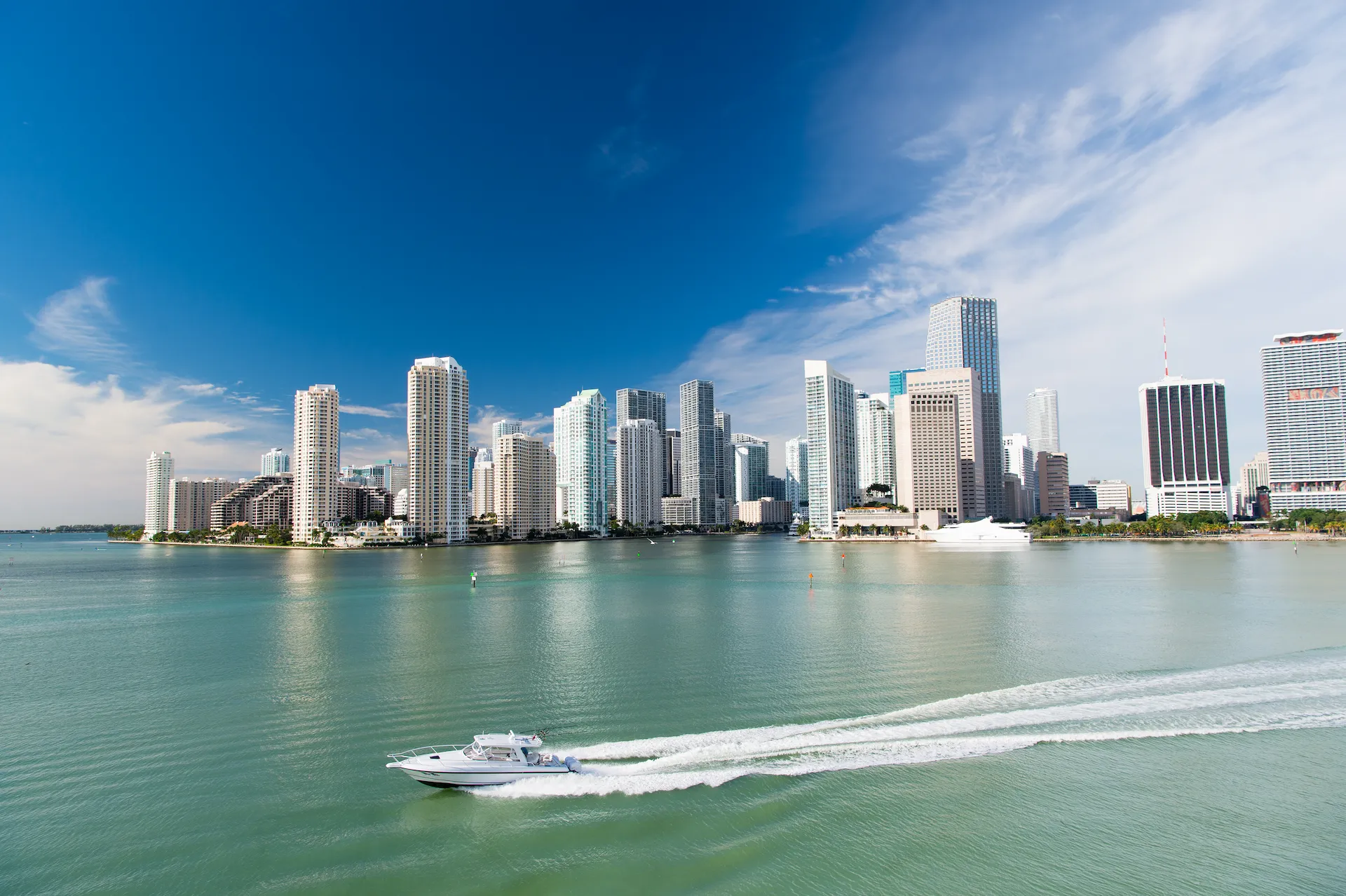
Investing capital in United States real estate is the strategy more and more investors from Colombia, Mexico, and Venezuela are using to move part of their wealth out of a single country and a single currency. It requires liquid capital available from USD $130,000, access to mortgage financing for foreigners, and a clear legal and tax process in Florida, a state with no state income tax. This guide covers every part of that decision, with real advantages and risks, not just one side of the coin. At PFS Realty Group, we've spent 24 years guiding more than 2,000 Latin American families through this process.
In this article:
- Why diversify geographically and by currency
- How much capital you actually need
- Financing options for foreigners
- Basic legal and tax structure
- Step-by-step investment process
- Concentrated capital vs. diversifying in dollars
- Real risks and how they're mitigated
- Frequently asked questions
Why diversify geographically and by currency
A portfolio with stocks, bonds, and properties can look diverse without actually being diverse. If all of those assets are in the same country and the same currency, they respond to the same macroeconomic shock on the same day: a change of government, capital controls, or a devaluation can hit 100% of your wealth at once. Diversifying across asset types is not the same as diversifying across risks.
The risk correlation no local bank will show you
Local advisors tend to measure returns, not exposure. Almost no one measures how concentrated your wealth is in a single country. That correlation — not the return on each individual asset — is the real risk that most investors discover too late.
What changes when your capital is in dollars and in another jurisdiction
Three factors explain why real estate in Miami reduces that correlation: the currency is denominated in dollars, not in a currency a central bank can devalue; the property title is protected by the U.S. legal system, independent of your home country's politics; and the physical asset behaves differently from the stocks and bonds in your local market, because it doesn't rise or fall for the same reasons.
How much capital you actually need
The reference figure we work with is liquid capital available from USD $130,000 to allocate outside your country. This is not the property's total price: it's the capital that, combined with financing, gives you access to an asset with strong rental and appreciation potential, without being limited to the lowest-quality inventory on the market.
How leverage works with the bank as your partner
Most purchases by foreign investors are structured with the bank financing up to 60% of the property's value and the buyer contributing the rest as a down payment. The investor is the one who captures the appreciation: the bank doesn't collect on the gain, only interest, and it's satisfied with that. Waiting to "save up more" before buying is, in practice, usually a way of postponing the decision out of fear, not a real financial strategy.
Financing options for foreigners
U.S. law allows foreigners to acquire properties with full ownership rights, regardless of nationality or immigration status. Mortgage lenders that specialize in foreign buyers typically finance up to 60% of the property's value, which means a down payment of between 30% and 40%, plus closing costs. From the bank's perspective, that capital requirement offsets the lack of local credit history.
Specialized financing through Avanti Lending
PFS Realty Group operates under a 360° service model in which mortgage financing for foreigners is handled through our strategic partner Avanti Lending, residential management through Avanti Management, vacation rentals through Avanti Stay, and asset protection through Mobile Assurance. The goal is for the financial and legal side to be handled without detours, before you even have to ask.
Basic legal and tax structure
Two structural decisions usually define this part of the process: how the property title is held, and which state you buy in.
LLC: the structure most used by foreign investors
It isn't mandatory, but most foreign investors buy through an LLC — a legal structure similar to a limited liability company — to separate the asset from their personal estate and simplify inheritance. The specific structure that's right for you depends on your tax situation in your home country and in the United States, so this decision should be made with a specialized attorney or accountant, not generically.
Florida, with no state income tax
Each U.S. state sets its own state income tax, and that difference is real: states like New York and California do charge state income tax on top of the federal tax, while Florida charges none. The exact amount that represents depends on your income level and should be confirmed with an accountant for your specific case, but it's one of the structural reasons companies and large estates have moved operations to South Florida in recent years.
Not sure whether to buy personally or through an LLC?
Tell us about your financial and tax situation, and we'll tell you what applies to your case.
Step-by-step investment process
The buying process for a foreign investor follows a structured path, not an improvised one:
- Defining investment objectives. How much capital is available, what level of risk is acceptable, and whether the goal is rental income, appreciation, or both.
- Identifying opportunities. A real comparison of 3 to 5 properties in areas like Brickell or Downtown Miami, evaluated against the defined objective, not against what "looks nice."
- Financial evaluation. Available financing, approximate rate, required down payment, and cash-flow projection if the property is rented out.
- Purchase process. Contract, deposit, due diligence, and closing, supported by a team that knows the foreign investment process from start to finish.
- Property management and follow-up. Rental, maintenance, and reporting — especially relevant if the investor doesn't live in the United States.
You can check today's available inventory in our listing of new real estate developments in Miami.
Concentrated capital vs. diversifying in dollars
The table below summarizes the difference between keeping 100% of your capital in a single country and currency, versus allocating a portion to dollar-denominated real estate in South Florida:
| Factor | Capital 100% concentrated in one country/currency | Capital diversified into Miami real estate |
|---|---|---|
| Exposure to a single event (devaluation, capital controls, change of government) | Hits 100% of your wealth the same day | Only affects the undiversified portion |
| Currency | Local currency, subject to devaluation | U.S. dollars |
| Jurisdiction | A single legal and political system | Title protected by the U.S. legal system |
| Miami-Dade appreciation (single-family home, 15 years) | Not applicable | USD 560,790 average accumulated appreciation |
| Income generation | Depends on the local asset | Potential rental income in dollars from year one |
Real risks and how they're mitigated
Diversifying into U.S. real estate doesn't eliminate risk: it changes its type. These are the real risks, not the ones mentioned in passing in a sales pitch:
- Exchange-rate risk when repatriating profits. The exchange rate between the dollar and your local currency can work against you when you bring profits back home. It's mitigated by thinking in years, not the next quarter, and by not forcing a capital exit at the worst point in the cycle.
- Remote management. Managing a property without living in the United States creates real friction. It's mitigated with professional property management, not by trying to handle everything remotely and without local support.
- Choosing the wrong asset or area. A cheap apartment in the wrong area won't appreciate or rent well. It's mitigated with a real comparison of 3 to 5 properties aligned with the objective, not a decision made on instinct.
- Over-leveraging. Financing beyond your real ability to pay exposes the asset if rental income temporarily drops. It's mitigated by keeping the recommended down payment and additional liquidity reserves, not the smallest amount possible.
- It's not for every profile. This strategy assumes an already-established portfolio looking to diversify, not a first nest egg. If that available capital doesn't exist yet, the right order is to build it first.
Frequently asked questions
As a reference, we work with investors who have liquid capital available from USD $130,000 to allocate outside their country. Mortgage lenders for foreigners typically finance up to 60% of the property's value, so that capital usually covers the down payment of between 30% and 40%, plus closing costs.
There's no universal figure — it depends on your current concentration, your investment horizon, and your risk tolerance. What is clear is that having 100% of your wealth in a single country and a single currency is not diversification, even if you hold different stocks, bonds, and properties: if they all respond to the same macroeconomic shock, it's one risk wearing several names.
A physical asset in another jurisdiction and another currency doesn't move for the same reasons as your local stocks, bonds, or properties. That's precisely what reduces the risk of a single event — a change of government, capital controls, a devaluation — hitting your entire portfolio at the same time.
It isn't mandatory, but most foreign investors buy through an LLC (a legal structure similar to a limited liability company) to separate the asset from their personal estate and simplify inheritance. Florida also charges no state income tax, unlike states such as New York or California, which do charge one on top of the federal tax. This article does not replace personalized legal or tax advice.
Yes. Most investors who buy with us never plan to live in Miami — they're after the asset and the dollar diversification, not the move. You need available capital and, in most cases, a valid U.S. visa; the rest of the process, including property management, can be handled remotely.
How do you start building wealth through real estate? We answer the questions that come up before investing.
Is having capital enough to build wealth?
I've always been asked whether having capital is enough to really build wealth. The most important thing is to be clear that what you need to achieve is making your money work for you. You can have a lot of capital, but if you keep it sitting in the bank, that money is shrinking every day, because inflation eats away at it and the bank gives you nothing for it.
Building wealth is different: you build it through real estate investments where you don't have to be working, but the asset itself is what actually generates the income. That's called passive income. The right approach is to make our money work for us, instead of constantly working for money.
What's the best time to invest in real estate?
A question I'm always asked is what the best time to invest is. I think the best time is when you break through the fear, have enough capital for that type of investment, and build with the leverage of a partner — that partner is the bank. The bank normally lends 60%, you bring the 40% down payment, and with that 100% you buy the investment.
Who captures the appreciation? The investor does, because the bank doesn't collect on the appreciation, it only collects interest, and it's happy with that. A lot of people say they want to save up more before buying — that's often just fear. What I recommend is doing it now: the opportunity is in this moment.
Why can investing in real estate be a good strategy for building wealth?
Why do investors consider real estate a good business? It's a part of the portfolio you should build. Land has always been scarce, land appreciates, and you're more conservative when you buy real estate, because first you have the land, and second you know the population keeps growing every day.
The more population there is, the greater the demand for properties, and there isn't always enough supply. It's a passive business: just holding it generates appreciation, generates rental income, generates income — you just have to keep monitoring and managing the property so your wealth is taken care of.
Why invest in real estate in Florida?
Why the United States? It's the number one country in the world. If the United States grows, the world grows; if the United States cools down, the world cools down. Where do you want to keep your capital? Where there are more millionaires and billionaires than anywhere else in the world. But the United States is a very large country, so you have to focus on cities with real growth trends, and Florida is one of them.
Every day, a thousand people move to Florida. We don't have enough supply for all those people, we have a lot of demand, and on one side you have the ocean, on the other the wetlands, so land keeps being scarce. South Florida is going to keep being attractive to the entire world.
What should you consider before making an investment decision?
Before making an investment decision, the first thing is to make a plan, a path to success: what the objective will be, how much capital I have, what the risk is. Based on those questions, we guide the client toward a more conservative or more aggressive approach, depending on their profile, and we map out the path to that success thinking long term — it has to be long term for it to be good for everyone.
How does PFS Realty help investors define a strategy to reach their goals?
At PFS Realty, the most important thing is first understanding the person's objective. Based on that objective, we make strategic decisions, action plans, and we accompany that client so they never leave without a clear, step-by-step path. You can't guarantee anything, but you can give them a path backed by our experience and advise them in the best possible way.
Investing in Miami is easier than you think. With PFS Realty, we make it happen.
Related guides
- Real Estate in the United States
- How to evaluate a condo in Miami
- Investor Stories and FAQ
- Living in Miami
If you want to understand how financing behaves today, check out our guide on interest rates for buying a house in the United States, and if you're looking to understand the asset's growth potential over time, our article on property appreciation dives deeper into those numbers. To see today's available inventory, visit the listing of new real estate developments in Miami or go back to the homepage to talk with an advisor.
Ready to diversify your capital?
Free advisory. We negotiate directly with the developer.