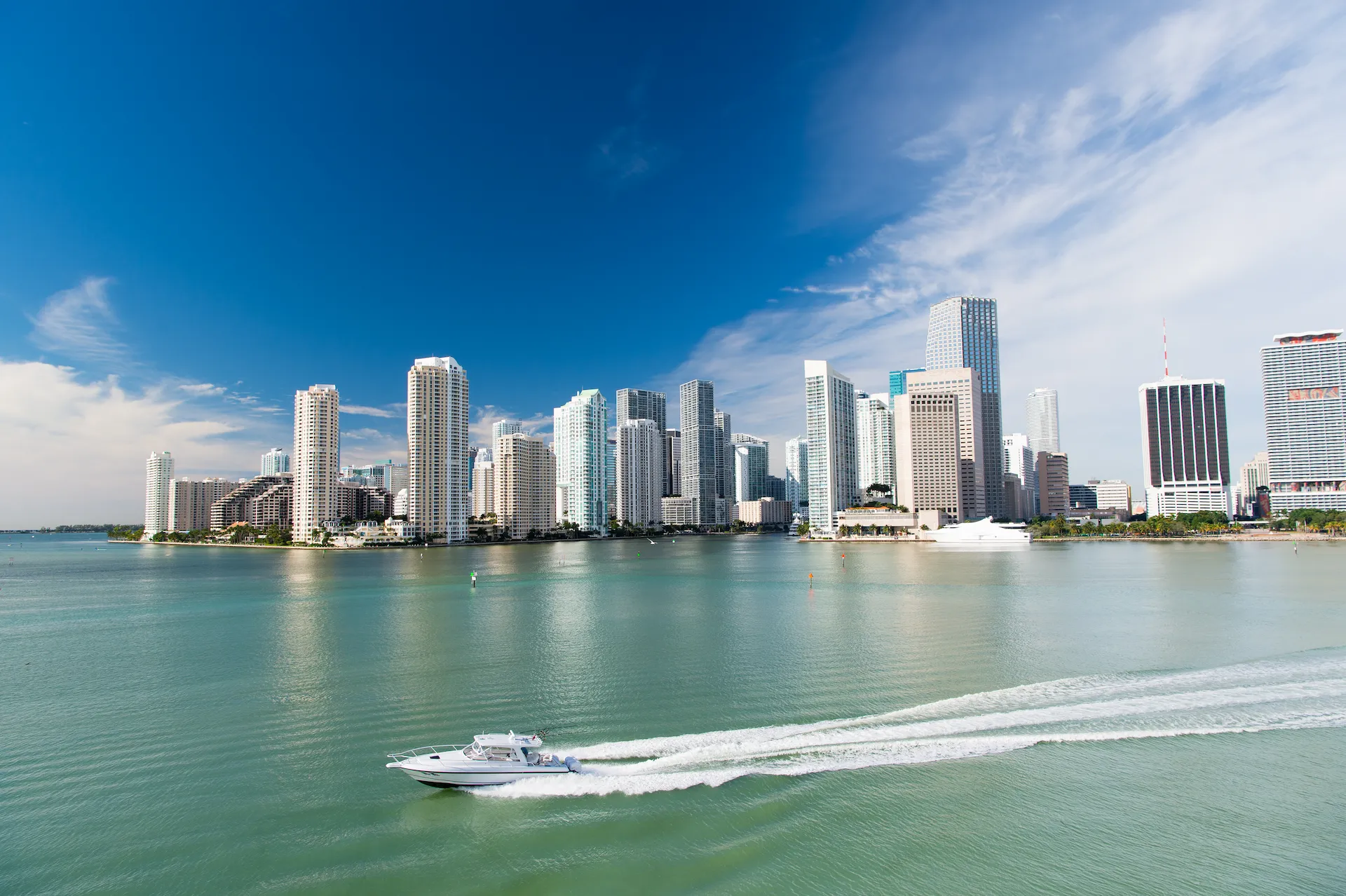
Thousands of Latin Americans are no longer just investing in Miami: they're moving here. Security, dollar stability, and quality of life are the three reasons that come up in almost every relocation story. This guide lays out, without the runaround, what you need to know before taking the step: why Miami, what visas and capital are required, what it really costs to live here, and the mistakes families make when they arrive without a plan. At PFS Realty Group, we've spent 24 years guiding more than 2,000 Latin American families through this process.
In this article:
- Why more and more Latin Americans are moving to Miami
- Visa types and requirements for relocating
- The real cost of living in Miami
- Buying vs. renting when you relocate
- Recommended areas based on your profile
- Common mistakes when relocating
- Frequently asked questions
Why more and more Latin Americans are moving to Miami
Florida gains an average of 1,280 new residents every day, a historic record that makes the southern part of the state one of the fastest-growing regions in the United States, according to the Miami Report by ISG World. Behind that figure are three concrete reasons that come up in almost every relocation story: security, dollars, and quality of life.
Security for the family
A more stable environment to raise a family, without the daily uncertainty of rising insecurity and cost of living that pushes so many to consider the change. It's not the only reason, but it's usually the one that sparks the conversation.
Dollars and a competitive tax environment
Living, saving, and working in the world's strongest currency, without a devaluation waiting around the corner, weighs as much as security. On top of that, Florida charges no state income tax. Every U.S. state sets its own state tax, and states like New York and California do charge state income tax on top of the federal tax; the exact amount depends on your income level and is worth confirming with an accountant. In Florida, they don't. That's why figures like Mark Zuckerberg, Jeff Bezos, and Donald Trump have relocated, and why companies like Blackstone, Citadel, Microsoft, and Google have moved operations to South Florida, along with Google co-founders Larry Page and Sergey Brin.
Quality of life and community
Miami has one of the largest Latin American communities outside the region, which makes it possible to relocate without losing the language or culture along the way. Add to that year-round warm weather, three international airports (Miami, Fort Lauderdale, and Palm Beach), and ongoing infrastructure development —projects like The Underline and the Metrorail expansion— that keeps raising the quality of the urban environment.
Visa types and requirements for relocating
This is where many families get stuck: they think they need residency or citizenship to buy, and that's not the case. You can buy a property in Miami as a foreigner, without residency or citizenship. What you do need is available capital for the down payment and, if your plan is to relocate permanently rather than just invest, a U.S. visa or residency process that's active or in progress.
Buying property doesn't replace an immigration process: it strengthens your profile and gives you a concrete foothold in the country, but the visa process has to move forward in parallel with an immigration attorney. This guide doesn't cover the specific legal requirements for each visa type —that depends on your particular case and current immigration law— and it doesn't replace specialized legal advice.
The real cost of living in Miami
The most common myth among Latin American buyers is that Miami is "outrageously expensive" compared to their home cities. The reality, with numbers, is usually different.
Housing: the example that breaks the myth
If you buy a new $400,000 property with around 150 square meters, the price per square meter comes out to around $2,800 to $3,000 —a price you won't find in areas like Polanco, Las Lomas, or Santa Fe in Mexico City. And at just 3 hours by flight from Mexico City, with multiple daily flights, Miami has stopped being a distant option compared to the traditional destinations for Mexican buyers, who used to buy in California, Texas, or Houston.
Financing and taxes: the other side of the cost of living
The real cost of living in Miami isn't measured only by the price per square meter. On a $400,000 property, the bank can finance 60% and you put down 40% (around $160,000). If you rent it out while you settle in, that rent covers interest, property tax, insurance, management, and the debt. The average appreciation over the last 20 years runs around 6% a year, plus cash flow of between 3% and 4% a year: a total return close to 10% a year. The table below summarizes the tax comparison most cited by those relocating from other U.S. states:
| Item | Florida | New York / California |
|---|---|---|
| State income tax | 0% | Yes, they charge it (varies by income level) |
| On $100,000 USD of income | $0 USD extra | Extra amount to confirm with an accountant |
| Federal tax | Applies the same | Applies the same |
What you should budget for separately
No honest guide will tell you that relocating is free beyond the down payment. In addition to the property's initial payment, you should budget for property tax, homeowner's insurance, condo association fees, private health insurance (the United States has no free public healthcare for non-residents), and, if you have children, private school tuition if you choose that route. These are real costs of settling in, not part of the property's price, and they should be part of your financial plan from day one.
Want a real budget for your move?
We help you project the full cost — not just the property price — based on your situation.
Buying vs. renting when you relocate
Renting in Miami while you "decide" means paying for something that will never be yours: every month of rent is a month of equity you don't build for yourself or your family. That's why the strategy most of the families we work with use isn't "rent until you decide," but buy first and move forward from there:
- They buy the right property with the capital available today.
- They rent it out while they sort out visa, work, and relocation logistics.
- They settle in when they're ready, without having lost time or paid someone else's rent in the meantime.
The property generates dollar rental income while you're not living in it, instead of sitting empty or you paying someone else's rent. Without a clear residency plan, every trip feels temporary: you come and go, but you never truly settle in because you never took the one concrete first step, which is almost always the property.
Recommended areas based on your profile
There's no such thing as "the best area of Miami": there's the right area for your situation. These are the most common matches among the families and professionals we advise:
Families
They look for space, proximity to schools, and a more residential pace of life. Areas like Downtown Miami with access to services and transportation, or more affordable developments like Doral and Kendall, tend to be the starting point for those who prioritize budget and space over nightlife.
Single professional
For those looking for proximity to work, social life, and a world-class building, Brickell —Miami's financial district and home to private equity funds, tech firms, and international law offices— tends to be the area with the best balance of lifestyle and connectivity.
Retirement or second home
Those looking for tranquility, climate, and lower density tend to look at coastal areas outside the urban core such as West Palm Beach or Hollywood, prioritizing quality of life and ease of renting when the property isn't in use year-round.
Common mistakes when relocating to Miami
After guiding hundreds of families through this process, these are the mistakes that most delay —or derail— a well-planned move:
- Putting off the decision indefinitely. Every year you think about it is a year you don't live where you want to live, while other families with the same doubts have already moved.
- Renting with no time limit "while they decide." Months or years of rent that build no equity, when buying first and renting out the property while you settle in achieves the same thing without losing the money.
- Looking for a speculative investment instead of a place to live. Confusing the goal leads to choosing the wrong property for your actual profile.
- Not having capital available for the down payment before starting the process. Without that capital ready, any relocation plan stays just an intention.
- Expecting to resolve the visa or residency on the same call with a real estate advisor. The immigration process moves forward in parallel, with an immigration attorney, not as part of the property purchase.
Frequently asked questions
No. You can buy a property as a foreigner, without residency or citizenship. What you need is available capital for the down payment; if you're also planning to relocate, it's a good idea to have a visa or residency plan in progress.
Yes. That's what many of the families we work with do: they buy first, rent out the property while they organize the move, and settle in when they're ready.
The property can generate dollar rental income in the meantime, instead of sitting empty. You don't lose the asset by not relocating right away: you put it to work while you decide on the right timing.
Buying a property doesn't replace an immigration process, but it does strengthen your profile and gives you a concrete foothold in the United States while you move forward with your immigration attorney in parallel. This article does not replace immigration legal advice.
As a reference, we work with families who have available capital starting at USD $130,000 for a property's down payment, along with an active or in-progress U.S. visa plan.
Why has Miami become such an attractive destination for investment? We answer the key questions.
Why did so many people start moving to Florida during the pandemic?
When the pandemic hit, many states like New York, Boston, Washington, and California were closed states. Florida was an open state: you could go out, you could live normally. A lot of people moved here for a while and found a sunny state, unlike the cold weather New York has almost all year, with first-rate infrastructure, three international airports —Miami, Fort Lauderdale, and Palm Beach— and a rich offering of art, entertainment, and fashion.
What these people found in Florida was a quality of life different from what they were living out there. That's what started drawing people here.
Why does Florida's lack of state tax attract people and companies?
What most drove these people to make the decision to relocate is that Florida has no state tax. Every U.S. state sets its own state tax, and states like New York, Boston, Washington, and California charge around an extra 20%, on top of the federal tax. A person earning $100,000 has to give the state $20,000 plus the federal tax — in Florida, they don't.
That's why we see cases like Mark Zuckerberg, Jeff Bezos, and Donald Trump moving to Florida, and why companies like Blackstone, Citadel, Microsoft, and Google are relocating here. That makes a city like Miami grow, along with Palm Beach.
How do land scarcity and demand affect property values in Miami?
That's a very positive factor for any real estate investment, because when there's a lot of demand and little supply, the price keeps rising. Land in Miami is scarce: on one side is the ocean, on the other the wetlands. That's why buildings are no longer 30, 50, or 70 stories — now we're talking about 100-story skyscrapers, and that's helping Miami become the Manhattan of the south.
Why can Miami be an attractive option for Mexican investors?
Mexicans, and Latin Americans in general, have a very interesting opportunity. Mexican buyers used to typically buy in California, Texas, or Houston. Today, just 3 hours by flight from Mexico City to Miami, with a large number of daily flights, the price per square meter in Miami can be more affordable than in Mexico City.
It's a myth that needs to be broken: if you buy a new $400,000 property with around 150 square meters, the price per square meter comes out to around $2,800 to $3,000 — a price you won't find in Polanco, Las Lomas, or Santa Fe.
How can a property in Miami help diversify and protect your wealth?
This opens up the possibility of having a property to live in, to enjoy, or to invest in. If you buy something for $400,000, the bank can finance 60% and you put down 40%, that is, around $160,000. You put the property up for rent, and that rent pays the interest, the property tax, the insurance, the management, and, in the end, the debt — the tenant ends up paying your debt.
The bank leverages you at 60%, and you keep the appreciation, which over the last 20 years has been around 6% a year, plus positive cash flow of between 3% and 4% a year. In total, the return on the investment runs around 10% a year. That's why, if you want to protect your wealth and diversify your portfolio without putting all your eggs in one basket, you need to move the money out, diversify, and hold dollar-denominated properties that generate income and protect your wealth going forward.
How can PFS Realty help me invest in Miami?
Today is a good time: current rates and conditions allow a Mexican buyer to get financing for up to 70% of the property's value with only 30% down, although it's recommended to put down 40% or 50% if possible, so that cash flow is positive from day one.
At PFS Realty we find the property, manage the mortgage loan, manage the property, find the tenant, and generate cash flow and appreciation. Investing in Miami is easier than you think. With PFS Realty, we make it happen.
Related Guides
- Real Estate in the United States
- How to evaluate a condo in Miami
- Investor Stories and FAQ
- Investing Capital in the US
If beyond relocating you want to understand the real monthly budget of living in the city, check out our guide on how much it costs to live in Miami, and if you're relocating with children, the guide on living with family in Miami covers schools and family-friendly areas in depth. To see today's available inventory, visit the listing of new real estate developments in Miami or head back to the home page to talk to an advisor.
Ready to take the first step?
Free advisory service. We negotiate directly with the developer.