

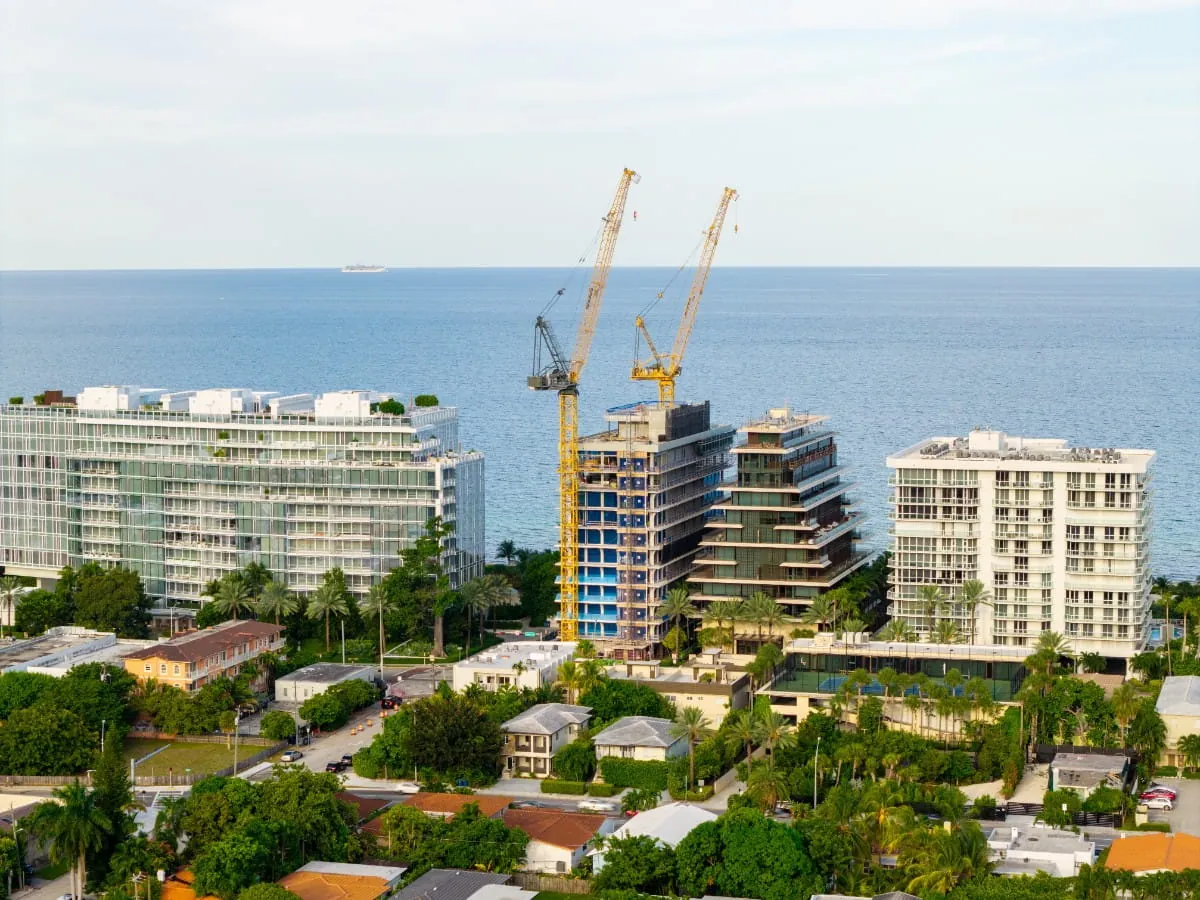
Buying property abroad is an increasingly accessible option for families who want to protect their capital, and it has become a very concrete financial decision for buyers in Mexico. Protecting the wealth you have built requires not depending solely on what happens in a single market, and in this scenario, Miami and South Florida have established themselves as an increasingly sought-after safe destination, thanks to a transparent legal framework and the chance to back your assets in dollars.
In this guide we explain, clearly, practically and without detours, how a property in Miami helps you shield your capital from devaluation and inflation in your home country. Here you will find the key elements to understand the benefits of diversifying in dollars and to make well-informed decisions with the support of experienced advisors in the international real estate market.
What does it mean to diversify your wealth?
Put simply, diversifying means avoiding putting all your wealth in one place. In family finances, it means spreading your capital across different options, regions and currencies to reduce the impact of any event that is outside your control and could end up hurting you. The goal is not just to seek gains, but to make sure a stumble in one sector or country does not put at risk the financial peace of mind you have achieved.
Geographic diversification
When you place part of your money outside Mexico to buy a property in Miami, your wealth stops depending 100% on your country's political or economic situation. The United States offers a highly stable legal environment where private property is strictly respected, giving you full certainty about your long-term investment.
Currency diversification
It means backing your assets in a strong currency such as the dollar. For a buyer in Mexico, owning real estate that gains value or generates monthly rent in dollars is direct protection against the loss of purchasing power of the peso and against inflation. This way, you secure the liquidity of your wealth in a currency with global reach.
Asset-type diversification
It means combining different types of assets. Real estate in high-demand areas such as Miami and South Florida is a tangible, secure asset. Unlike the swings of the stock market, a property has a real value that tends to rise over the years and can also give you a steady rental income.
Risks of concentrating your wealth in a single market
Having all of your money in a single country, whether in homes, land, businesses or banks, leaves your wealth exposed to whatever happens in the local economy. Devaluation, regulatory changes or inflation can erode the value of your savings before you have time to react. Diversifying is the most effective way to reduce those risks and give your family's future greater strength.
Why consider Miami to diversify your wealth?
For many years, Miami and South Florida have been seen by many Mexicans as a one-of-a-kind vacation destination because of their beaches, tourist attractions and theme parks, but for some time now the area has also positioned itself as one of the most important financial and real estate capitals of the continent, combining ideal conditions of economic security, sustained appreciation and high returns.
International real estate market
Miami has one of the most dynamic real estate markets in the world. Unlike other local markets that can stall because of internal economic cycles, real estate demand in South Florida stays constant thanks to the permanent interest of buyers from all over the globe. This gives you the peace of mind of holding an asset that not only keeps its value but is also easy to sell or market whenever you decide.
Exposure to the U.S. market
Investing in Miami gives you direct access to the most solid and regulated economy in the world. By owning a property in the United States, you benefit from a transparent legal framework that protects your rights as an owner, regardless of your nationality. It is the most direct way to place part of your wealth under the rules of a stable, predictable financial system.
Dollar-denominated investment
The dollar remains the global reference currency and the most trusted safe haven worldwide. When you buy a property in Miami, your assets are valued in this currency, so if you decide to rent it out to receive a steady income or aim to gain appreciation over the years, your returns will be in dollars, protecting you from the devaluation of the Mexican peso and from inflation in your country.
International demand
The constant arrival of multinational companies, executives, residents from other U.S. states seeking tax benefits (such as the absence of a state income tax), and Latin American families ensures continuous occupancy in rental properties. This diversified demand sustains rental prices over the long term and minimizes the risk of the property sitting vacant.
Connection with Latin America
For a Mexican, Miami's geographic and cultural closeness is an unbeatable advantage. With dozens of daily nonstop flights from Mexico's main cities (such as Mexico City, Monterrey and Guadalajara), you can be at your property in a few hours. In addition, Spanish prevails in business, financial services and property management, which makes the day-to-day handling of your purchase easier, with no language barriers.
Investing in dollars, a diversification strategy
The dollar remains the global reference currency for protecting capital and doing business. For Mexican families, structuring part of their wealth in this currency is a long-term measure of protection and asset stability.
Differences between wealth in pesos and in dollars
The main difference lies in the ability to preserve the value of money over time. While wealth held in Mexican pesos is exposed to local inflation and to cycles of devaluation against hard currencies, an asset in dollars maintains global purchasing power.
Having assets or income in dollars balances the scales: even though your living costs or local commitments may be in pesos, your wealth backing grows in a strong currency that serves as a buffer against any currency crisis.
Exposure to another economy and another market
When you invest in real estate in Florida, you become part of the dynamics of the U.S. economy without having to move your residence or change your day-to-day life in Mexico. This means your capital benefits from U.S. economic growth, its employment rates, domestic consumption and its protective legal framework. This decoupling from local cycles means that the ups and downs of one market do not affect the other, giving your finances real balance.
Benefits and risks of diversifying by currency
As with any financial decision, it is important to have the full picture so you can act on solid ground:
Benefits:
- 01Protection against devaluationyour assets are valued in a currency that has historically gained strength against the peso.
- 02Solid cash flowif you rent out the property, you generate recurring income in dollars that you can reinvest or spend in Mexico at an exchange rate in your favor.
- 03Access to the U.S. financial systemopen accounts, access mortgage financing for foreigners and build a U.S. credit history.
Risks to consider:
- 01Short-term currency fluctuationsthe exchange rate can move over short periods, so a dollar real estate investment should always be planned with a medium- and long-term view, not as quick speculation.
- 02Lack of tax knowledgefailing to consider the taxes that apply in both the U.S. and Mexico can lead to surprises. That is why the support of international advisors is key to optimizing your tax burden on both sides of the border.

What type of property can be part of a wealth strategy?
There is no single way to structure a real estate purchase in Miami, since the ideal type of property depends on your family and financial goals. Whether you want to maximize cash flow, have a space for family vacations or combine both, the South Florida market offers alternatives suited to every profile.
Rental property
These are properties bought with the main purpose of generating recurring income through long-term rentals (residential leases of 6 to 12 months). They are usually apartments or townhomes in areas with high residential demand, offering stable occupancy, lower management operating costs and a predictable cash flow in dollars.
Second home
These are properties meant for the exclusive use of the owner and their family during vacations, business trips or rest. In this setup, the main focus is not rental yield but capital preservation through the property's appreciation, combined with the enjoyment of a space of your own in one of the U.S. cities with the best quality of life and connectivity.
Property for personal use and rental
This flexible model, very popular in condo-hotel projects or in buildings whose rules allow short-term rentals (Airbnb-style), lets you use the property for certain weeks of the year and rent it out the rest of the time. It is the ideal option for those who want to cover the property's maintenance costs with vacation rental income without giving up enjoying it on their trips to Miami.
New developments (pre-construction)
Buying at the launch or pre-construction stage lets you enter the project at initial prices with payment plans deferred over the construction phase (for example, partial payments throughout the construction process and the balance at delivery). This format lets you benefit from the appreciation the property generates from the blueprints to the final handover of the keys, requiring a smaller initial outlay compared with a move-in-ready property.
Different investment ranges
The South Florida real estate market covers a wide range of values. There are options from residential apartments and townhomes in emerging developing areas starting at USD 350,000 to USD 500,000, up to luxury properties or oceanfront condominiums that exceed a million dollars. Defining your initial budget and your use of leverage through loans for foreigners helps narrow the search to the right segment.
| Property type | Wealth objective | Main features | Key considerations |
|---|---|---|---|
| Residential rental (long-term) | Stable passive income generation and capital preservation. | 6- to 12-month leases; professional tenants or families; lower management costs. | Moderate but steady returns; lower turnover and minimal wear on the property. |
| Second home | Personal use, family enjoyment and dollar wealth protection. | Exclusive family use; prime locations; high-end finishes and amenities. | Generates ongoing fixed costs (HOA, property tax, utilities) with no rental income. |
| Mixed use / short-term (condo-hotel) | Coverage of maintenance costs and flexible personal use. | Rental by the day or week through platforms or the building's management; fully furnished. | Higher guest turnover; higher management and cleaning costs; subject to local regulations. |
| Pre-construction (new developments) | Capture appreciation from the blueprints and flexibility in cash flow. | Launch prices; payments deferred during construction; state-of-the-art finishes and technology. | Capital is committed during the construction period until the property is delivered (2 to 3 years). |
Exclusive resource
Miami Investment Guide 2026
The legal and financial step by step, in a PDF.
Download the free guideWant to know which type of property fits your wealth strategy?
We help you define the type of property based on your goal: rental, second home, mixed use or pre-construction.
Miami compared with other real estate investment options
When evaluating where to place capital, it is common to compare the Miami and South Florida real estate market with local alternatives in Mexico or with other cities within the United States. Understanding the competitive advantages Miami offers helps you make decisions based on concrete financial data and on real long-term protection of your wealth.
Miami vs. the local real estate market
Investing in real estate in Mexican cities and regions such as Mexico City, Monterrey or the Riviera Maya offers the advantage of firsthand knowledge of the environment, but it carries high exposure to peso volatility, possible regulatory or tax changes, and reduced liquidity in periods of uncertainty.
Miami, by contrast, offers a dollarized platform where the value of the property and the rental income are shielded from devaluation. In addition, the U.S. institutional framework guarantees standardized purchase processes and unwavering respect for private property.
Miami vs. other U.S. cities
Compared with traditional markets such as New York or Los Angeles, Miami offers superior tax and economic advantages:
- Florida does not charge a state income tax (State Income Tax), unlike New York or California, which has driven a steady migration of large capital, companies and high-profile executives to the state.
- Cost per square meter and appreciation. Although prices have risen steadily, the entry cost in Miami is still more competitive than in New York, offering a wider margin for appreciation and value growth.
- The combination of a coastal setting, first-class infrastructure and cultural offerings attracts permanent residents and investors year-round, avoiding the seasonality of other regions.
Key differences: market, currency, demand, costs and management
- While local markets depend largely on domestic buyers, Miami has global demand (Latin America, Europe and domestic U.S. movers) that sustains prices and speeds up sale or rental times.
- Wealth in Mexico is priced and calculated in pesos, while in Miami, the property's appreciation and cash flow are 100% in dollars.
- In Miami there is a constant flow of corporate tenants, relocating families and tourists, which ensures high occupancy rates and several rental models (long or short stay).
- Maintenance costs (homeowners association fees or HOA, property tax, insurance) in Miami are predictable and regulated by the owners' associations and county authorities, avoiding arbitrary charges or surprises in managing the property.
- Managing a property in Mexico remotely can be complex without an on-site manager. In Miami there is a professional ecosystem of property management companies that handle the entire process (rent collection, maintenance, tenant screening and periodic reports) without the owner having to travel to Miami.
| Comparison criteria | Mexico | Miami and South Florida | Other U.S. metros (e.g., NY / LA) |
|---|---|---|---|
| Currency of the asset and rents | Mexican pesos (MXN) | U.S. dollars (USD) | U.S. dollars (USD) |
| Protection against devaluation | Limited (depends on the exchange rate) | High (direct USD shield) | High (direct USD shield) |
| State tax burden | Variable local taxes | 0% state income tax | High state tax (up to +10%-13%) |
| Source of demand | Mostly local and domestic | Global (international + U.S. domestic migration) | Mainly domestic and corporate |
| Ease of remote management | Varies by city and manager | High (comprehensive property management platform) | High, but with higher operating costs |
| Legal certainty and regulation | Subject to local regulatory changes | Highly stable and regulated at the state/federal level | Highly stable, but with stricter rental regulations |
Renting out the property as part of your wealth strategy
For many buyers in Mexico, acquiring a property in South Florida goes beyond holding a real estate asset abroad and becomes an engine that generates cash flow in dollars. By putting the property up for rent, it not only aims to gain appreciation over time but also helps cover its own operating costs and even generate net profit.
Income generation
The strength of Miami's job and tourism markets sustains continuous demand for lodging. A well-located property produces a cash flow in dollars that lets you protect yourself against the devaluation of the Mexican peso. In addition, this recurring income in hard currency can be reinvested, used to pay off a U.S. mortgage or to fund personal and international expenses.
Traditional rental vs. short-term
Choosing the right rental model is a key decision that defines the operations and returns of your asset:
- 01Traditional rental (long-term)it is based on 6- to 12-month leases. It offers predictable income, lower management costs and less wear on the property. It does not require the property to be furnished (in most cases) and is not subject to local tourist taxes.
- 02Short-term (Airbnb-style vacation rental)it involves renting by the day or week in properties legally authorized for this purpose, such as condo-hotels. It generates a higher average nightly rate and the owner can enjoy the property during certain periods of the year. However, it involves higher guest turnover, higher operating expenses (constant cleaning, utilities, furnishings) and the obligation to collect and pay tourist lodging taxes to Miami-Dade County.
Operating costs
To project the real (net) return of the property, you need to subtract the recurring expenses associated with the property from gross rental income:
- 01Property Taxannual tax calculated by the county authority on the property's assessed value.
- 02Homeowners association (HOA) feemonthly or quarterly payment for the upkeep of common areas, amenities and the building's insurance.
- 03Property insurancean essential policy that protects the structure and covers liability toward third parties.
- 04Maintenance and interior repairsbudget set aside for the property's natural wear and for appliances or air conditioning.
Professional property management
Managing a rental remotely from Mexico is feasible thanks to specialized property management companies. For a monthly fee, the management firm takes care of:
- Promoting the property and selecting qualified tenants through background checks.
- Collecting the rent and handling the security deposit.
- Coordinating preventive maintenance and handling emergencies 24 hours a day.
- Sending detailed monthly financial reports and facilitating the transfer of funds to your bank account.
Tax considerations for foreign owners
The U.S. Internal Revenue Service (IRS) sets specific rules for individuals who receive income from U.S. real estate without being tax residents of that country.
As a general rule, the IRS applies a flat 30% withholding on gross rental income if a timely tax election is not made. However, the U.S. tax code allows the nonresident owner to make the so-called "ECI election" (Effectively Connected Income) under Section 871(d).
By making this election, the IRS treats rental income as if it were connected with a business activity in the U.S. This gives you the fundamental right to deduct all ordinary and necessary operating expenses of the property (mortgage interest, property tax, HOA fees, insurance, management, repairs and even the accounting depreciation of the structure). This way, income tax is calculated only on the real net profit and not on the total rent collected.
In addition, thanks to the Convention to Avoid Double Taxation in force between Mexico and the United States, the tax paid to the IRS on the rent from your Miami property can be credited on your return with the SAT in Mexico, avoiding paying tax twice on the same income. Given how specific these rules are, it is advisable to have the advice of an accountant who specializes in international taxation.
What should you consider before buying to diversify?
Buying a property in Miami and South Florida to protect capital requires comprehensive planning that goes beyond choosing the design or location of the property. Evaluating the financial, tax and operating factors from the very beginning is the difference between making a passive purchase and building a solid, efficient long-term wealth strategy.
Investment horizon
Buying international real estate should always be approached with a medium- and long-term view. Although the Miami market offers liquidity and steady appreciation, properties are physical assets that need time to absorb the initial closing costs and to maximize appreciation capture across economic cycles.
Liquidity
It is essential to define in advance what percentage of your available capital you will allocate to the property without compromising your immediate liquidity in Mexico. Although a property in Miami is a tangible, high-demand asset that can be sold relatively quickly compared with other Latin American markets, selling a property is not instant. Keeping a reserve fund in cash or liquid assets for personal or property contingencies ensures stability.
Mortgage financing for foreigners
Buying in the U.S. does not require paying 100% of the property's value in cash. U.S. banks offer credit lines specifically for foreign buyers (Foreign National Loans), which usually finance up to 70% of the property's value, requiring a 30% down payment. Using a mortgage as leverage lets you preserve capital to diversify into other assets and, at the same time, make your tax burden more efficient by deducting the loan interest.
Taxes at origin and destination
Advance tax planning is essential to avoid tax setbacks. You should consider:
- 01Purchase and ownership taxesannual payment of property tax and the state taxes associated with the deed or the recording of the mortgage.
- 02Income taxannual return with the IRS for the income generated by rentals, using the permitted operating deductions and the double taxation treaty to credit these payments on your return with the SAT in Mexico.
- 03Estate taxthis is a critical factor for non-U.S. tax residents. If a property is acquired in your personal name, real estate assets exceeding USD 60,000 are subject to an inheritance tax that can reach up to 40% on the excess. To avoid this impact, it is advisable to structure the purchase through a corporate strategy (such as a legal entity or an international holding scheme), which removes direct ownership in your personal name and protects the transfer of your wealth to your heirs efficiently.
Insurance and maintenance
The operating budget must include comprehensive protection for the property. In Florida, taking out property insurance that covers structural damage, liability and weather events is mandatory if you use bank financing, and highly advisable for cash purchases. Likewise, projecting an annual fund for interior repairs and paying the community (HOA) fee on time maintains the property's profitability and resale value.
Professional remote management
Controlling a real estate asset in another country requires delegating operations to local professionals. Hiring a property management firm ensures that your property receives preventive maintenance, that tenants are selected with credit background checks and that payments are collected on time. This cost should be built into your financial projection from day one to ensure an experience free of operational stress.
Currency risk
Since the investment and its returns will be in dollars while your usual commitments or lifestyle may be in Mexican pesos, it is key to understand currency dynamics. The exchange rate will fluctuate in the short term; however, keeping a portion of your wealth backed in dollars works as a structural hedge against the accumulated devaluation of the peso over time.
Exit strategy
From the moment of purchase, you should project how and when you will recover your capital or realize your gains. This means estimating the costs associated with a future sale (brokerage commissions, seller closing costs and Capital Gains Tax).
In addition, if you are a foreign investor, the FIRPTA withholding law (Foreign Investment in Real Property Tax Act) will apply, which requires temporarily withholding between 10% and 15% of the gross sale price at closing to guarantee payment of federal taxes, an amount that is adjusted and formally settled when you file the final return with the IRS.
Want to review taxes, financing and structure before you buy?
An advisor explains how to plan your Miami purchase based on your profile, with the support of specialists.

Is Miami right for your wealth strategy?
To determine whether the Miami and South Florida market fits your financial planning, it is key to compare your family goals with the characteristics of this asset:
- 01Investor profileideal for Mexican families and investors seeking legal stability, capital preservation and wealth protection against local volatility, prioritizing security over high-risk financial speculation.
- 02Purpose of the purchaseit works as an anchor to shield assets, diversify wealth outside Mexico or create a family legacy backed by one of the strongest economies in the world.
- 03Available capitalaccessible both for cash purchases and for bank financing schemes for foreigners (Foreign National Loans), which require a down payment of 30% to 50% of the property's value.
- 04Investment horizondesigned for medium- and long-term views (starting at three to five years), allowing the property to absorb the initial closing costs and capture the market's appreciation.
- 05Personal use vs. income generationit is flexible. You can opt for exclusive enjoyment as a second home, pure returns through long-term rentals or mixed formats (condo-hotels) to cover operating expenses and use the property on your trips.
If you are ready to see options, explore the properties for sale in Miami or the new real estate developments in Miami.
 Buying from Mexico
 Taxes and costs
 Miami vs. Mexico
 Mexicans in Miami