


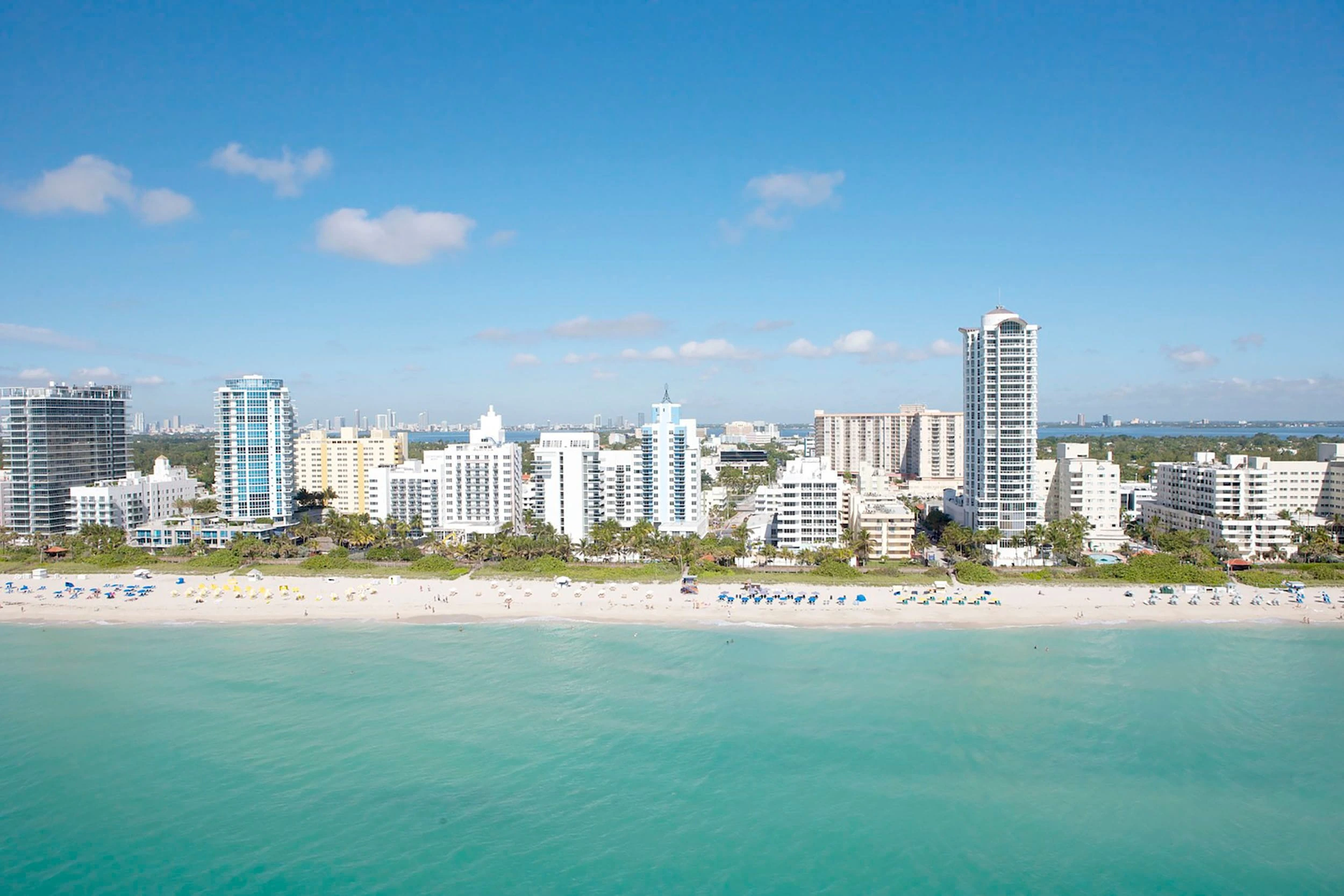
In recent years, Miami and South Florida have become one of the top destinations for Mexicans making real estate investments.
According to Florida Realtors, in 2025 more than 49% of new construction in South Florida was purchased by international investors, and of that total, 3% came from Mexican buyers — the sixth-largest nationality by transaction volume, putting USD $489 million into properties in this state.
For the Mexican investor, Miami represents the opportunity to acquire a property in dollars, in markets with consistent international demand, and with very attractive return options. Unlike financial investments, a property in Miami is a physical asset that generates income, appreciates over time, and offers wealth protection.
In this analysis we explore the reasons why Mexicans choose Miami as a real estate investment destination, how mortgage financing works for foreigners, and what specific opportunities are available in today's market.
Why does Miami attract Mexican investors?
There are many reasons why Mexicans choose Miami as their real estate investment destination. Here are the most relevant ones:
Access to a strong currency
The US dollar is the world's reference currency. By acquiring a property in Miami, an investor can build wealth in dollars, protecting the investment against possible fluctuations in their local currency. Unlike dollar bank deposits, a real estate property offers appreciation potential in addition to the value protection that benefits their interests.
Sustained international demand
Miami and South Florida are a highly attractive draw for international buyers. In 2025, foreign investors bought approximately USD $4.4 billion in residential properties in South Florida, according to data from Florida Realtors and Miami Realtors.
This international demand means that well-located properties in Miami and South Florida are highly sought after in both the residential and vacation rental markets, generating consistent dollar-denominated income for the owner.
Proven historical appreciation
Historically, Miami has posted consistent appreciation sustained for over a decade. To put it in perspective, someone who bought a single-family home in Miami-Dade fifteen years ago has, on average, gained USD $560,790 in equity today. Since 2011, condo prices in Miami-Dade have risen 295% and single-family home prices 287.9% — a striking figure that reflects how attractive this region's real estate market is for making an investment.
Very attractive returns
Most properties located in neighborhoods like Brickell, Downtown, Wynwood, and Miami Beach, among others, generate monthly rents that typically vary depending on the property type and the rental available. For reference:
- One- to two-bedroom condos can generate between USD $2,500 and USD $4,000 a month in long-term (residential) rent.
- The same type of property in vacation rental can generate USD $3,500 to USD $6,000 a month, depending on occupancy.
Legal framework and transparency
The US real estate market is one of the most regulated in the world. Property records are public, values are verifiable, and legal processes are clear. Foreigners can buy property with no restrictions. On top of that, associations like Florida Realtors and Miami Realtors work to keep the market's guidelines clear and well-defined, for the peace of mind of everyone involved in a property's purchase, sale, and rental process.
Why should you diversify your wealth outside Mexico?
Diversification is a fundamental wealth management concept: distributing assets across different geographic locations, asset classes, and currencies instead of concentrating your wealth in a single location or class, in order to reduce concentrated risk.
Geographic diversification
If you concentrate 100% of your real estate wealth in Mexico, you're exposed to variables specific to the local market, such as national economic cycles, regulatory policies, exchange rates, and macroeconomic conditions. If, instead, you split your wealth — say, 70% in Mexico and 30% in another location like Miami or South Florida — you gain exposure to variables from both locations.
That way, if a change negatively affects the Mexican market, it won't impact the entirety of your wealth, and the same holds true if the reverse happens. This doesn't mean one location is better than the other — it means being in multiple locations reduces your dependence on a single market.
Exposure to a different real estate market
Mexico's real estate market and Miami/South Florida's real estate market operate under different dynamics, which we explain here.
Mexico
This is a market dominated by local buyers (Mexican residents), with regulations and legal processes subject to the national system, as well as the influence of your own country's monetary and fiscal policy, and economic cycles aligned with it.
Miami and South Florida
This market is the exact opposite of Mexico's, since international demand here is constant, with buyers coming from many countries, and it depends on US regulations, that country's monetary and fiscal policy influences, and economic cycles that typically don't line up with Mexico's.
Because of this, a property in Miami has access to tenants of different nationalities and profiles, while one in Mexico tends to have more demand from Mexican tenants. This means it has greater exposure to different types of rental demand, both residential and vacation.
Investment denominated in dollars
The Mexican peso and the US dollar have very different value histories. Since 2010, the peso has fluctuated more than the dollar.
To understand this concept better, keep in mind that a property in Mexico generates rent in pesos and its value is also measured in that currency. If the peso depreciates, your ability to convert those pesos into dollars decreases, since you need more pesos to buy a dollar.
On the other hand, a property in Miami generates rent in dollars and its value is denominated in that currency. If you want exposure to dollars or protection against peso depreciation, you have direct access to assets denominated in that currency.
International wealth
The concept of international wealth means holding assets in multiple countries. Here are some practical considerations:
- 01Liquidityif you need capital in dollars, you can sell your property in Miami — but if you only hold assets in Mexico, you have to sell them there first and then convert the pesos into dollars.
- 02Flexibilityan investor with international wealth can make decisions based on the specific cycles of each market, not just the national cycle.
- 03Legal protectionby not depending 100% on a single system for your properties, you diversify your legal risk.
- 04Operating opportunitiesholding international wealth lets you pursue more sophisticated operating strategies with your properties. For example, you can refinance a property in a market where rates are more favorable, or sell in a market where prices are high and buy in another where they're more accessible.
So why does it pay to diversify?
The most important reason to diversify your wealth outside Mexico isn't that the Miami/South Florida market is better than your own country's — it's that concentrating 100% in a single country, market, currency, and legal system means grouping all your risk in one place.
In other words, diversifying spreads out the risk. If a variable in Mexico changes for the worse, it won't impact the entirety of your wealth. And if a variable in another market changes for the better, it contributes to the growth of your total wealth.
Exclusive resource
Miami Investment Guide 2026
The legal and financial step by step, in a PDF.
Download the free guideWant to know how much of your wealth should be in dollars?
Tell us your situation and we'll help you evaluate it, at no cost and with no commitment.
What advantages does Miami offer as an international real estate market?
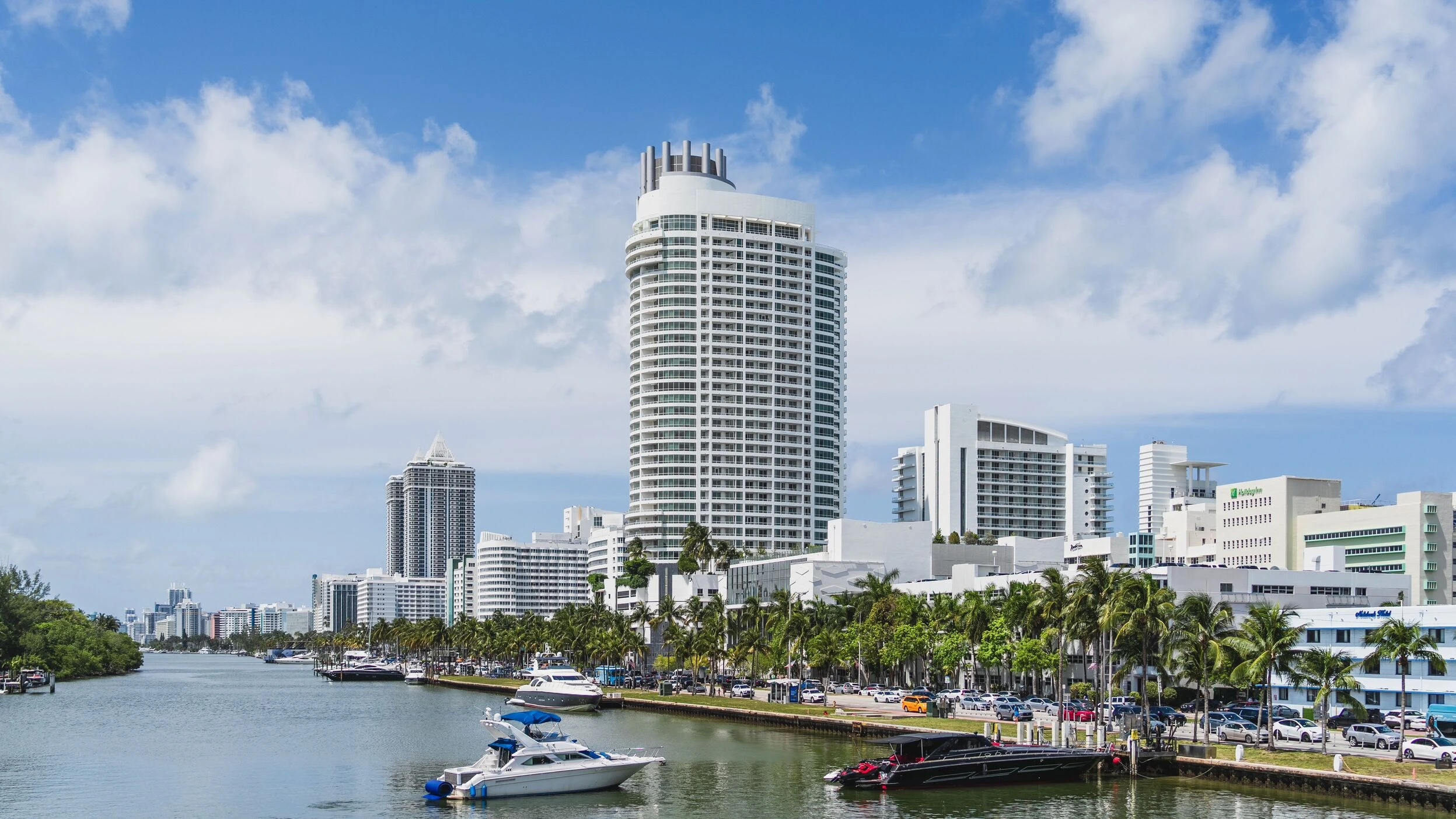
Miami and South Florida have become a real estate investment destination for buyers worldwide. In 2025, foreign investors bought close to USD $4.4 billion in residential properties in South Florida, compared to USD $3.1 billion in 2024 — a 42% year-over-year increase.
49% of all new construction, pre-construction, and condo conversions in South Florida over the past 18 months were bought by international investors. This demand comes from multiple places, such as Latin America (especially Colombia, Mexico, Argentina, and Peru), Europe, Asia, and Canada. This geographic diversity of buyers creates stability in the market, since when one region goes through a downturn, others are still buying.
What is the profile of foreign buyers?
Foreign buyers in Miami cover a range of different profiles, explained below:
- 01Wealth-focused investorshigh-net-worth individuals looking to diversify their wealth in dollars and across different geographic locations.
- 02Institutional investorsinvestment funds, investment companies, and family offices that see Miami as a strategic market.
- 03Homebuyersforeigners buying to live in, work from, or have as a second home.
- 04Rental investorsbuyers who prioritize generating rental income, whether residential or vacation.
Accelerated real estate development
According to market data, there are currently more than 36,290 residential units under construction in Miami and South Florida — development driven by demand for properties that has been sustained over time. This has attracted the interest of internationally renowned developers, from American to Brazilian, Colombian, and European, who have found in this market a great opportunity to connect with thousands of investors eager to find attractive investment alternatives suited to their interests and needs.
New projects and entry strategies
For an investor entering the market now, one advantage is the availability of pre-construction projects in neighborhoods like Downtown Miami, Brickell, Miami Beach, Wynwood, Edgewater, and Fort Lauderdale, among others. This alternative offers the following:
- 01Launch pricingthe first units sold in a project tend to be priced lower than units sold later.
- 02Staggered paymentsinstead of paying 100% up front, you pay in phases during construction.
- 03Appreciation potential during constructionbetween launch and delivery — which can take two to four years — the unit's price can rise as construction progresses and demand grows.
Strategic locations in Miami and South Florida
- 01Downtown Miamian epicenter of urban transformation that draws young professionals, startup workers, and people who value proximity to public transit, like Brightline (the high-speed train) and the Metromover.
- 02Brickellan established financial district with consistent international demand. Preferred by multinational executives and young professionals. A high-liquidity luxury market.
- 03Miami Beacha luxury destination with high tourism demand.
- 04Coral Gablesan established community with distinctive architecture and family-friendly quality of life.
- 05Edgewatera premium location on Biscayne Bay with panoramic views and new luxury developments.
- 06Wynwoodan emerging area driven by creativity, art, and culture, with mid-term appreciation potential.
- 07Fort Lauderdalea city that draws investors looking for strategic locations with their own identity between Miami and the beaches to the north, with more accessible budgets.
Returns and appreciation: Miami vs. Mexico City
Looking at the overall average for both cities, the price per square meter in Miami is higher than in many premium areas of Mexico City, but for the investor, the price difference is offset by the returns. While an apartment in Polanco generates monthly rent in pesos, the same capital invested in Miami does so in dollars, with very different demand cycles.
Total returns in Miami come from three sources:
- 01Higher annual returnsa property in Miami can generate between 5% and 7% in residential rent, versus 2% to 3% in Mexico City, or between 10% and 15% in vacation rental.
- 02Documented appreciationproperty prices in Miami have historically appreciated between 8% and 10% annually, compared to 2% to 3% in Mexico City. A property bought 15 years ago nearly quadrupled in value.
- 03Dollar exposurerent and appreciation are counted in dollars, with no exchange-rate risk relative to the Mexican peso.
When a Mexican investor adds up these three variables, investing in Miami is more attractive than in Mexico City, despite the higher initial price per square meter.
The dollar and international investment
A property in Miami is denominated in US dollars, which means the value of the property, the rent it generates, and any related transaction all occur in that currency. For the Mexican investor, holding dollar-denominated assets gives them direct exposure to that currency, without needing to convert anything when they receive rental income from their Miami property or when they decide to sell it.

Currency exposure
The peso-to-dollar exchange rate fluctuates constantly, affecting the relative value of your wealth whenever it's converted from one currency to another. Someone whose wealth is exclusively in pesos runs the risk of feeling the impact of peso fluctuations. And if the peso depreciates against the dollar, the ability to convert those pesos into dollars decreases, since more pesos are needed to obtain a dollar.
The situation is different for someone whose wealth is diversified across both currencies, since if the peso depreciates, their dollar-denominated wealth holds its value in that currency.
What's the difference between holding your wealth in pesos versus dollars?
Throughout history, the US dollar has been considered a global reserve currency with steady demand — unlike the Mexican peso, which fluctuates according to Mexico's macroeconomic conditions, which tend to be more unstable.
Rather than a debate over which currency is "better," the analysis should focus on recognizing that both currencies have different stability histories. Because of this, if your wealth is split between dollars and pesos, a peso devaluation only impacts the peso-denominated portion, while dollar-denominated assets hold their value in that currency.
What rental opportunities exist in Miami right now?
Miami and South Florida have sustained rental demand, since the market mostly attracts young professionals relocating for work, people arriving from other countries, and tourists looking for short-term stays.
This demand comes from multiple sources, such as internal US migration cycles, international migration, tourism, and remote-working professionals who choose Miami as their temporary base.
Traditional rental vs. short-term rental
Residential or long-term rental is typically for periods of at least twelve months, generating predictable monthly income for the owner. In this option, the tenant is responsible for upkeep and maintenance, and current market regulations are stricter, requiring a formal lease and legal tenant protections.
As for vacation or short-term rental, tenants stay for nights or weeks. This option lets the owner earn more income per night, but requires more active property management, since guest turnover, cleaning, and communication all need to be handled.
*These figures are approximate and may vary depending on market conditions and specific project details.
How much does it cost to buy a property in Miami?
When a Mexican investor is interested in buying a property in Miami, they need to consider the property's price, but also all of the associated costs generated during the purchase process and over the years they own the property.
The initial cost: down payment and closing costs
If you pay in cash, you need to have 100% of the property's value available. If you finance, most lenders specializing in foreign investors require a down payment of approximately 30% of the property's value.
Beyond the price and the down payment, there are closing costs, which run between 2% and 5% of the total purchase value and include multiple items — for example, the real estate attorney's fees, the property appraisal, the title search and title insurance, the professional property inspection, the valuation, and the lender's fees.
Annual costs: property tax, HOA, and insurance
Once you're the owner, you have to cover annual costs that continue for as long as you own the property. Florida charges an annual property tax of around 0.8% of the assessed value.
If the property is in a condo building, there's also a monthly HOA (homeowners association) fee, which varies by building and available amenities. This covers maintenance of common areas, building staff salaries, insurance for the entire building, and general services.
Property insurance is mandatory if there's a mortgage, and it's recommended even if you buy in cash. Its cost varies based on the specific location, construction type, and coverage chosen.
Operating costs if you rent out the property
If you decide to rent out the property, additional operating costs will reduce your gross rental income. These include professional property management, which can run 8% to 10% of the monthly rent for long-term residential rentals.
For short-term or vacation rentals, management costs can be a bit higher — between 20% and 30% of the rent — because they include marketing on platforms, booking management, professional cleaning between guests, and guest support.
Preventive maintenance is another important cost. We recommend setting aside 5% to 10% of annual rental income for repairs and maintenance. This covers replacing air-conditioning filters, plumbing repairs, periodic repainting, and other fixes. It's also prudent to keep a reserve for major repairs, which can be more costly.
Want to know how much you actually need to buy in Miami?
We'll help you calculate the total cost based on your profile: cash or financing.
Buy to invest, live in, or have a second home?
Investing: rental income and wealth
Goal: generate rental income plus long-term capital appreciation.
Profile: an investor focused on returns, numbers, and monthly cash flow.
Considerations:
- The location must have strong rental demand.
- The property should generate income from month one.
- Professional property management is recommended.
- Calculate real operating expenses.
- Investment horizon: 10+ years.
Ideal areas: Brickell (residential), Downtown (vacation), and Miami Beach (vacation).
Second home: personal use plus rental potential
Goal: have a property to live in occasionally and generate additional income when not in use.
Profile: an investor who wants to combine personal use with generating additional income.
Considerations:
- The property should be move-in ready.
- Accessible location for frequent trips from Mexico.
- Ability to rent it out during the seasons or weeks you're not using it.
- Operating costs that impact rental income.
Ideal areas: Miami Beach (beach access and entertainment) and Coral Gables (close to the airport).
Moving to Miami: housing and long-term planning
Goal: relocate to Miami and settle there permanently.
Profile: an investor looking for a new place to live with wealth-building potential.
Considerations:
- The location must meet daily-life needs (proximity to work, schools, services).
- Rental potential if you eventually decide to rent it out.
- Quality of life and community are priorities.
- No pressure to generate immediate income.
Ideal areas: Coral Gables (community, schools) and Edgewater (lifestyle, views).
What should a Mexican investor consider before investing in Miami?
Investing in Miami requires considering factors that go beyond simply finding a property and making an offer to the seller. You need to think ahead about the legal, tax, and operational aspects that will affect your investment for years to come.
How are taxes in the United States?
In the United States, the annual property tax is roughly 0.8% of the assessed value. Additionally, if the property is rented out, the rental income must be reported to the IRS (Internal Revenue Service). There's a treaty between Mexico and the United States to avoid double taxation, which means taxes paid in the United States offset your tax obligations in Mexico.
On the other hand, if you sell the property at a gain from appreciation over time, you have to pay federal capital gains tax. On top of that, a non-resident foreigner is subject to a special 15% withholding on the sale price called FIRPTA (Foreign Investment in Real Property Tax Act). This can later be recovered if you demonstrate your actual tax liability is lower.
Ownership structure
A Mexican investor can buy property under several legal structures, each with different implications:
- You can register it directly in your personal name, where you're the sole owner.
- You can also create an LLC (Limited Liability Company), a separate legal entity that owns the property. This gives you protection against civil liability, so if someone is injured on the property, the claim goes against the LLC, not your personal assets.
- Another option is to use a trust, where the property is held under a trust agreement. This structure offers privacy (the owner's name doesn't appear in public records) and flexibility in how the property is transferred to your heirs.
Each structure has different tax implications and requires legal advice to choose the right one for your personal situation.
Financing and rates
If you plan to finance the purchase, you should get prequalified before you start looking at properties. This gives you clarity on how much you can borrow, at what interest rate, and on what terms. Current rates for Foreign National Loans in South Florida range between 6.0% and 7.5% for 30-year mortgages, though they vary based on market conditions and the applicant's profile.
We recommend reviewing multiple lenders, since rates can differ. Even a small difference in interest rate represents thousands of dollars in interest paid over 30 years. It's also key to understand what your monthly payment includes (mortgage principal and interest), plus property taxes and insurance, which are deposited into an escrow account.
Insurance and protection
Property insurance is mandatory if you have a mortgage, and it's recommended even if you buy in cash, since it covers damage to the property's structure from fire, hurricane, wind, or vandalism. In South Florida, insurance tends to be more expensive than in other regions due to the hurricane risk properties in this region are exposed to.
Professional management
Deciding whether to manage the property yourself or hire a professional manager is very important, since although self-management saves money, it demands a lot of time to deal with tenants, handle emergency repairs, and manage communications. Many Mexican investors who live in their home country and choose this option later find that remotely managing the property isn't the best idea.
A professional manager handles everything — from finding tenants and collecting rent to maintenance and problem-solving — letting the owner enjoy the extra income without the hassle.
Rental regulations by area
Not all areas of Miami allow unrestricted vacation rentals. Before buying a property with the intent to rent it out by the night on Airbnb, you need to verify whether the specific condo allows it. Some buildings only permit long-term rentals or cap the number of days per year a unit can be rented for short stays.
The condo declaration and building bylaws set these rules, and ignoring them can lead to fines or, worse, the condo association ordering the owner to stop renting. That's why it's essential to carefully review these documents before buying the property.
Maintenance costs and reserves
Even if the property generates monthly rent, the owner needs to keep financial reserves to cover repairs and maintenance. Mechanical systems like air conditioning, heating, or appliances need frequent replacement. Similarly, roofs, plumbing, and major structural elements have life cycles that also require repair or replacement periodically.
We recommend keeping a reserve of three to six months of the property's operating expenses to handle the emergencies that inevitably happen. Those who don't end up going into debt when a major repair comes up.
Exchange rate and currency exposure
The exchange rate between the Mexican peso and the dollar fluctuates frequently, affecting the investor when converting pesos into dollars to buy the property, and when converting dollars into pesos when receiving rental income or selling the unit.
There's no way to predict when the exchange rate will be favorable. However, one advantage of holding wealth in dollars is that it's protected against depreciation of the Mexican peso.
Specialized legal and tax advice
Investing in a country other than your own without legal and tax advice is risky, since both the US legal system and the tax obligations and processes related to these matters are different.
A real estate attorney specializing in foreign transactions helps verify that the seller has clear title, that there are no prior liens or mortgages, and that the property is properly registered. Likewise, an accountant or tax advisor with experience working with international investors understands how to report correctly to the IRS and how to handle the Mexico-US tax treaty.
Why buy in Miami with PFS Realty?
Market knowledge built over years
At PFS Realty we've been in the Miami and South Florida market for 24 years, and over that time our team has learned the specific dynamics of each area — which is why we have the experience and knowledge to know what works in Brickell, what defines Downtown Miami, and what the real trends are in Miami Beach, for example.
With that background, we're equipped to help the Mexican investor understand which properties generate the best returns, when the right moment to act is in market cycles, which developers are reliable and which aren't, and how price and demand trends vary from one area to another.
Access to properties that aren't publicly available
Not every property in Miami is listed on public portals like MLS. Many developers offer priority access and preferential pricing to advisors who bring qualified buyers. At PFS Realty, we've built trusted relationships with developers throughout our history that give us access to projects before their public launch, exclusive launch pricing, and opportunities that don't appear on public listings.
This access advantage is especially valuable in pre-construction projects, where the first buyers get much lower prices than those who come in later. An investor searching only public portals is looking at properties that have already been seen by hundreds of other potential buyers, paying prices that have already started to climb.
Structured comparison of opportunities
With hundreds of properties available in the market at any given time, the natural question every investor asks is: which one is the right one? At PFS Realty we don't just show properties — we go further and compare investment opportunities in a structured way.
We evaluate properties within your specific price range, analyze the rental potential in each location, calculate real operating costs based on data from similar buildings, project expected returns, and review relative risk and stability.
Access to mortgage financing for foreigners
Getting financing as a non-resident foreigner is hard without the right advice. At PFS Realty we have specialists in the Foreign National Loans program who know the key paths forward.
With us, investors get access to fast prequalification, simplified documentation that doesn't require a FICO score, competitive rates, and a team with specific experience working with Mexican investors. Without this access, a Mexican investor would be searching on their own across multiple banks, likely without success and with more doubts than certainty.
Coordinating the full purchase process
The purchase process involves multiple steps that need to be coordinated in sequence — making the right offer, negotiating, obtaining financing approvals, legal verifications, and closing. A specialized advisor coordinates all of it, sparing the investor from managing these matters in a language and legal system they may not know.
Closing without surprises
At closing, many details need to be coordinated and perfectly aligned for everything to go smoothly. An advisor makes sure all documentation is in order, funds are transferred correctly, the title is properly registered, and there are no unexpected surprises at the last moment.
Management and ongoing support
After the papers are signed and you take possession of the property, the work doesn't end. At PFS Realty we continue supporting the investor with comprehensive 360° services that address all their needs, such as professional property management, vacation rental optimization, and specialized insurance coverage for property owners in Florida.
If you're looking for specific areas to buy in, explore condos for sale in Brickell and in Downtown Miami, or check out the full list of new real estate developments in Miami.
 Protect and diversify
 Condos in Miami
 Living in Miami