


Miami is one of the U.S. cities with the strongest economic and residential outlook, with a solid real estate market and a wide supply of properties available for purchase. According to the latest Miami Realtors reports, active inventory of condos in Miami exceeds 11,400 condominiums and townhomes in Miami-Dade County, and tops 26,500 units when you add the neighboring counties of Broward and Palm Beach in South Florida.
This is one of the reasons why, every year, thousands of families, executives and international investors choose this destination for its quality of life, its unique beaches, its legal stability and the chance to protect their wealth in dollars within a dynamic, established market. However, finding the right property goes beyond a building's views or amenities.
Each neighborhood in Miami and the region has its own personality, and each condominium has different rules about use and management. In this guide we review the key factors driving residential demand in the city, the features of three of its most attractive areas and the financial aspects worth being clear on before taking the step, backed by general figures from official sources such as Miami Realtors and Florida Realtors.
Why buy a condo in Miami?
According to Miami Realtors reports, the median price of condos and townhomes in the county is around USD 408,000, a figure that reflects the segment's stability amid swings in the U.S. market and its appeal compared with other major waterfront metropolises.
The main reasons local and international buyers choose this type of property include:
- 01Steady flow of residents and touristsFlorida's population growth (Miami and South Florida gain more than 1,000 new residents a day on average) and the continuous arrival of travelers (almost seven million a year) sustain residential occupancy for both annual leases and short stays.
- 02Convenience and integrated servicesmost residential buildings offer security, common-area maintenance, gyms, pools and coworking spaces in one place.
- 03Liquidity and variety of inventorythe market ranges from studios to luxury bayfront residences, accommodating different budgets and wealth goals.
What should you consider when choosing a condo?
Before selecting a property, the first thing to do is define the main purpose of the purchase, since each condominium's internal rules vary by building: one that seems ideal for living in year-round may have different restrictions from one designed to host guests on a regular basis.
When evaluating options, it is key to review four essential aspects:
- 01The building's rental policyEach homeowners association sets minimum lease terms. Some condominiums require annual leases, others allow rentals of at least 30 days, and certain developments authorize short-term rentals.
- 02Location and daily mobilityProximity to free public transit stations (such as the Metromover), main roads, financial centers and the airport affects residents' comfort and the appeal to future tenants.
- 03The condominium's age and conditionNewer buildings incorporate modern construction and energy-efficiency standards, while older properties tend to offer more spacious interiors.
- 04Pet and parking rulesCheck parking space assignments and the conditions for pets to avoid setbacks after closing.
Exclusive resource
Miami Investment Guide 2026
The legal and financial step by step, in a PDF.
Download the free guideAreas to buy a condo in Miami
The city has neighborhoods that are very different from one another in urban pace, views and resident profile. These three areas concentrate a large share of the current supply of condos in Miami:
Brickell: the financial heart for condos in Miami
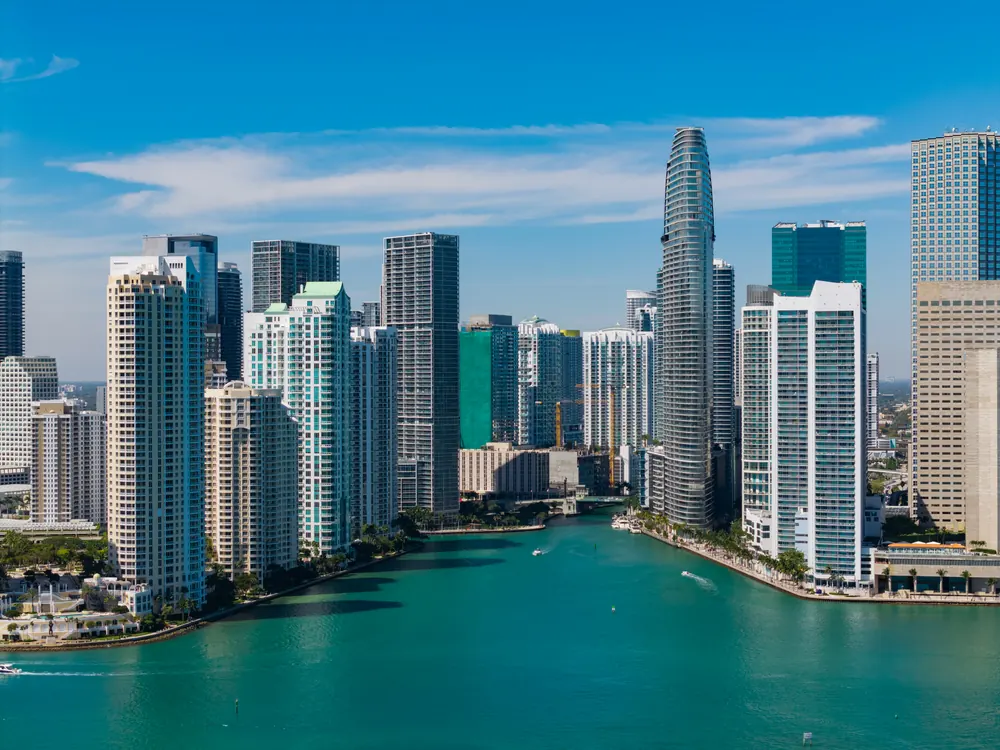
Recognized as South Florida's main financial district, Brickell combines corporate skyscrapers with high-rise residential towers, chef-driven restaurants and shopping centers such as Brickell City Centre.
Its biggest draw is being able to walk to offices, stores and entertainment without depending on a car. It is highly valued by executives, young professionals and buyers looking for condos in Miami with strong long-term rental demand.
Edgewater: bay views and cultural proximity
Located north of downtown and bordering Biscayne Bay, Edgewater has become a quiet residential corridor with direct access to the water and waterfront parks such as Margaret Pace Park.
Its strategic location puts it a few minutes from the Design District, Wynwood and Miami Beach. It attracts residents who prefer a calmer, more residential setting, with open bay views and easy access to the main cultural and dining hubs.
Downtown Miami: urban renewal and condos in Miami
Downtown is going through a deep modernization driven by improvements in infrastructure, transportation and public spaces, including the Bayfront Park waterfront and cultural and sports venues such as the Kaseya Center. Classic residential towers and new developments with flexible-use schemes converge here. For those analyzing condos in Miami, Downtown offers immediate connectivity to the Brightline high-speed train and quick access to the region's main highways.

New condos and real estate developments
Pre-construction and new construction projects are a relevant alternative within the supply of condos in Miami. Buying a property in the early stages gives you access to buildings designed under Florida's most demanding building codes, equipped with smart-home technology, wellness areas and contemporary finishes, and at better prices.
In addition, new developments usually offer staged payment plans during construction, which makes it easier to plan the capital outlay before the final delivery of the unit and any eventual mortgage financing.

What expenses does buying a condo involve?
When calculating the budget to buy a condominium in Florida, in addition to the purchase price of the property, it is important to account for closing costs and the recurring fixed costs of maintaining the unit:
- 01Closing costsThey include legal fees, title insurance, inspections, recording taxes and loan administrative costs (if you use a mortgage). They generally represent between 2% and 5% of the property's value.
- 02Maintenance fee (HOA)A monthly payment that covers building management, cleaning, security, amenity upkeep and the structural insurance of common areas.
- 03Property taxIt is calculated annually based on the county's assessed value of the property and varies according to use (primary residence or investment property).
- 04Unit interior insuranceIt covers interior finishes, furniture and liability inside the condo.
Discover the options available with PFS Realty
Choosing between living in Miami or renting out a property means analyzing each building, its surroundings and its financial outlook with clear information. At PFS Realty Group, with more than 24 years of experience and more than 2,000 families advised in South Florida, we support you at every stage of the process: from selecting condos in Miami that match your goals to arranging mortgage financing for foreigners, legal and tax advice, insurance and full management of your property.
Are you thinking about buying a condo in Miami?
Whether you are looking for a place to live, a second home or a property to invest in, at PFS Realty we help you find options that fit your goals. Explore real estate opportunities in Miami and get personalized advice to take the next step.
Contact us and find your next condo in Miami.
 Houses for sale in Miami
 How to evaluate a condo
 Real estate in the U.S.